Friday, July 7, 2017

Best Chinese Smartphones – July 2017

Since June, two new smartphones managed to get into our top 5 best Chinese smartphones list, the Nubia Z17 and the OnePlus 5. Both of these phones were announced last month, and both are quite compelling, though the OnePlus 5 is considerably more affordable. The Xiaomi Mi 6 and the OnePlus 5 are both fueled by the Snapdragon 835 SoC, and both are quite affordable, while the rest of this list is also filled with really powerful handsets, read on.

5. Nubia Z17

The Nubia Z17 was announced earlier this month, and this is Nubia's all new flagship smartphone. This handset is fueled by the Snapdragon 835 SoC, while it comes with no bezels on the sides, and it also packs in 6GB or 8GB of RAM, depending on which variant of the device you opt to purchase. This phone is not yet available from GearBest, but it will be soon, and if you're interested, you can hit the link down below in order to stay up to date. The Nubia Z17 will cost around $600 from GearBest once it lands.

The Nubia Z17 Arrival Notice

4. Honor 9

The Honor 9 is Honor's all-new flagship smartphone which is, more or less, a smartphone alternative to the Honor V9 aka Honor 8 Pro. This handset was first announced in China, and it is now available in Europe as well. The Honor 9 is made out of metal and glass, it sports a 5.15-inch Full HD (1920 x 1080) display, along with 4GB / 6GB of RAM and 64GB / 128GB of storage, depending on where you purchase it. This phone can be purchased from Amazon (European sites) for around €429 (depending on where you buy it). The phone is not yet available on GearBest, but it is coming soon.

Buy the Honor 9

The Honor 9 Arrival Notice

3. Huawei P10 & Huawei P10 Plus

The Huawei P10 and the Huawei P10 Plus are the company's current flagship smartphones, and they're both fueled by the Kirin 960 64-bit octa-core processor. The Huawei P10 sports a 5.1-inch Full HD display, while the Huawei P10 Plus comes with a 5.5-inch QHD panel. Both devices ship with a dual camera setup (20-megapixel + 12-megapixel) on the back, and on top of those sensors you'll find Leica's lenses. The Huawei P10 is out of stock on GearBest, at least at the moment, but you can get the Huawei P10 and the Huawei P10 Plus via Amazon for $679.99 and $649, respectively. It's a bit odd that the Plus model is cheaper, but there you have it.

Buy The Huawei P10

Buy The Huawei P10

Buy The Huawei P10 Plus

Read More: Hands-On With The Huawei P10

Read More: Huawei P10 Review

2. Xiaomi Mi 6

The Xiaomi Mi 6 is the company's all-new flagship, and a really affordable phone considering what it offers. This handset sports a 5.15-inch Full HD display, 6GB of RAM and 64GB / 128GB of non-expandable storage. The device is fueled by the Snapdragon 835 64-bit octa-core SoC, and it ships with Android 7.1.1 Nougat, with Xiaomi's MIUI 8 OS on top of it. The Xiaomi Mi 6 is priced at $429 over at GearBest (international 64GB storage variant), while the ceramic model is currently out of stock. You can also get the 128GB storage model if you want, that link is also included down below.

Buy the Xiaomi Mi 6 (International Variant)

Buy the Xiaomi Mi 6 (Ceramic Variant)

Pre-order the Xiaomi Mi 6 (128GB Storage Variant, Global)

Read More: Hands-On With The Xiaomi Mi 6

Read More: Xiaomi Mi 6 Review

1. OnePlus 5

The OnePlus 5 landed last week, and it is currently available from GearBest. The 6GB RAM variant of the device can be purchased for $529.99, while the 8GB RAM model costs $599.99. Having said that, this phone is made out of anodized aluminum, while it comes with a dual camera setup on the back, and a front-facing fingerprint scanner. The device is fueled by the Snapdragon 835 64-bit octa-core processor, and it packs in a 3,300mAh battery on the inside.

Buy the OnePlus 5 (6GB RAM variant)

Buy the OnePlus 5 (8GB RAM variant)


Source: Best Chinese Smartphones – July 2017

Thursday, July 6, 2017

Taiwan IC design houses seeing orders ramp-up from China smartphone sector

Taiwan IC design houses seeing orders ramp-up from China smartphone sector

Cage Chao, Taipei; Jessie Shen, DIGITIMES [Friday 7 July 2017]

A ramp-up of orders from China's smartphone sector will buoy revenues at Taiwan-based IC design houses, particularly those specializing in LCD driver ICs, wireless charging solutions and fingerprint sensors in the third quarter of 2017, according to industry sources.

China-based Oppo and Vivo took the lead in stepping up their pace of orders after completing inventory adjustments, said the sources. Huawei, Xiaomi, Gionee and Meizu started to place orders with their chip suppliers at a faster pace recently, the sources indicated.

Recent increases in smartphone-use chip and component prices also indicate a good quarter for smartphone and related chip companies, the sources noted.

Many Taiwan-based IC design houses focusing on the smartphone sector are set to enjoy sequential revenue growth of as much as 20% in the third quarter, the sources said. Several companies, such as fingerprint sensor supplier Egis Technology (Egistec) and FocalTech Systems with its TDDI (touch with display driver integration) offering, are expected to see their revenues skyrocket in the second half of 2017, the sources continued.

Meanwhile, major Taiwan-based IC design houses including MediaTek, Novatek Microelectronics and Himax Technologies have already seen their shipments for smartphones pick up, the sources said. The strengthening order visibility will boost sales performance in the third quarter.

oppo

China-based Oppo has taken the lead in stepping up the pace of orders.Photo: Michael Lee, Digitimes, July 2017


Source: Taiwan IC design houses seeing orders ramp-up from China smartphone sector

Wednesday, July 5, 2017

How Xiaomi plans to reclaim the smartphone crown in China

How Xiaomi plans to reclaim the smartphone crown in ChinaXiaomi pioneered an online flash-sales model that lifted it to dizzying heights and made it Asia's most valuable startup, but it's since fallen on hard times. Now it's counting on old-fashioned retail to make a comeback, and that's proving a much stiffer challenge.

The smartphone maker is going through a major transformation after missed targets prompted a bout of soul-searching by billionaire co-founder Lei Jun.

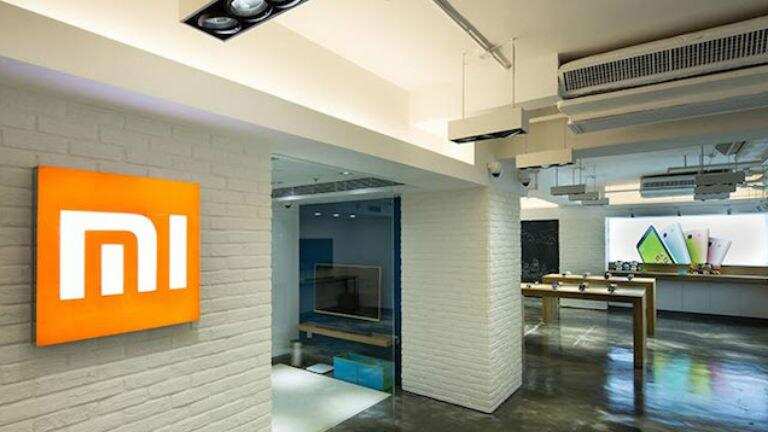
From Harbin in the chilly northeast to glitzy eastern Shanghai, it aims to build 1,000 "Mi Homes" by 2019 - about twice Apple's global store count - that will rake in an envisioned 70 billion yuan ($10 billion) in sales by 2021.

Xiaomi - which has no real track record running stores or ar mies of sales reps - wants to set an upmarket tone for its brand by building its own signature outlets. But it's taking on surging rental and labor costs, while rivals Huawei, Oppo and Vivo have sewn up prime locations by striking deals with hundreds of thousands of resellers.

Customers browsing the Apple-style blond-wood tables at Xiaomi's flagship outlet in Beijing are confronted just across the road by a giant Huawei chrysanthemum logo. In the central city of Wuhan, a new outlet is flanked by one hawking devices from Lenovo Group.

"The reason the Chinese brands are building these experience stores is because they want to lift their brands to appeal to higher-end buyers," said Jin Di, a research manager at IDC China. "It fits Xiaomi's long-term strategy but they just crossed the starting line."

Founded seven years ago, Xiaomi -- or "Little Rice" -- has long eschewed retail in favor of online campaigns that create buzz in the biggest cities. By 2 014, its formula of flash sales and savvy social media helped it top Chinese smartphone rankings and amass a $45 billion valuation surpassed only by Uber. The accolades piled up, as some industry observers compared Lei to visionary Steve Jobs.

But as the market matured, Xiaomi grew ill-equipped to capture customers in outlying regions who wanted hands-on advice and a test-drive, just the type of users Oppo and Vivo courted. The first Mi Home wasn't even supposed to be a store and was designed in 2011 to be a service center where people lined up for repairs or to pick up online orders.

Read: How Xiaomi is strengthening its after sales service in India

Apple has demonstrated how a well-crafted physical presence can augment branding and interaction with fans. That's crucial as it promotes services from games to movies and touts its "'ecosystem" -- Mi-branded pressure cookers, bathroom scales and robot vacuums made by the 100 or so startups in which it's in vested.

Xiaomi's retail focus is second- and third-tier cities along the economically vibrant coast and inland provincial capitals. While not as populated as Beijing or Shanghai, they house millions, and that number's growing as urbanization turns hundreds of millions of rural residents into city-dwellers. And it's beginning to cast its eye abroad, starting with outlets in Russia and India, where it's already the largest player after Samsung Electronics Co.

For now, its stores attract an eclectic crowd. At its Beijing flagship, college student Zhao Yang planted both elbows on one of the tables and fiddled with a Mi 6 -- Xiaomi's current marquee device. Grandmas trailing toddlers and migrant laborers on their break milled about behind her.

"It feels like an Apple Store to me. I mean the desks, the decor," said the sophomore majoring in trade, who came from the Vivo store and will head to Samsung's or Oppo's next. "This is what an electronics shop should look like."

Xiaomi's opened about 100 locations so far. It cut the ribbon last week on a Hong Kong outpost hidden away on the eighth floor of a nondescript building in the Causeway Bay shopping district, tucked beside a travel agency. A few hundred meters away, Apple occupies several floors, including prized street frontage, of an upmarket mall.

Where Apple hawks but a handful of products in large airy spaces, this Mi Home crammed suitcases, travel pillows, sunglasses and power banks into a long and low-ceilinged room.

"To become a globally influential smartphone and internet company, we have to be both online and offline," Senior Vice President Wang Xiang told reporters at its opening. "It's a matter of letting people try out our products, but also to get feedback from our fans."

Xiaomi declined to provide an executive for an interview.

Prime real estate doesn't come cheap. The best spots in a large Chinese mall fetch around 600 yuan a square meter monthly, according to Nie Kaiyuan, a Jinan-based manager for builder and developer China Railway Construction Corp. Xiaomi was paying around 450 yuan per square meter for outlets in Jinan, in Shandong, he said. Some malls even ask for a slice of revenue instead of rent.

"The rate could be 15% or even higher for the busiest locations," Nie said. "Rental prices in the busiest shopping centers in second- and third-tier Chinese cities aren't considered cheap at all."

Read: Xiaomi's Manu Kumar Jain on 2017 priorities, offline push & startup investments

Xiaomi is counting on the prices being worth it. Co-founder Lin Bin has told Chinese media that sales at one 260-square-meter branch in north Beijing exceeded 10 million yuan in April. Its revenue target translates to 70 million yuan a year on average from each of a 1,000 stores. That's several times Chow Tai Fook Jewellery Group Ltd.'s average HK$20.9 million apiece from 1,319 self- operated Chinese outlets, according to its 2017 annual report.

It's a battle Xiaomi has to win. By the first quarter, Xiaomi had fallen to No. 5 among smartphone sellers in China, shipping fewer than half the devices of frontrunners Huawei and Oppo, according to IDC. Yet it's narrowing the gap globally, prompting rivals to keep an eye on the Mi Home rollout.

"It's definitely not good news that Xiaomi is coming back," said Chen Yihua, a Beijing sales assistant at an outlet of the electronics chain D-Phone that sells Oppo phones. "But Vivo and Oppo are very popular now, so I'm not too worried this year. Maybe next year, let's see."


Source: How Xiaomi plans to reclaim the smartphone crown in China

Tuesday, July 4, 2017

China's Xiaomi Snaps Up Nokia Patents to Galvanize Global Drive

(Bloomberg) -- Xiaomi Corp. has acquired a swathe of patents from Nokia Oyj, making its latest acquisition of technology to drive a global expansion.

The Chinese smartphone maker is getting its hands on a trove of intellectual property from the Finnish company that once led the world in phone sales before Apple Inc. ushered in the smartphone era. The deal expands a portfolio augmented last year by the purchase of some 1,500 patents from Microsoft Corp., and may help smooth over potential legal tangles abroad. Under their agreement, Xiaomi will buy patents from Nokia for an undisclosed sum, while the two companies have agreed to share essential licensing rights.

Xiaomi, which has slipped in global smartphone rankings since 2014, is angling to make a comeback through investments in retail stores at home while fine-tuning an overseas expansion that's slowed with the departure of former international honcho Hugo Barra. For now, it's focusing on a selection of emerging markets including India, Russia and Indonesia. But the company has said it intends to establish a presence in the U.S., where it's held off on selling phones in favor of cheaper devices such as fitness bands.

"We only want good assets. So both parties can get what they want," Wang Xiang, who's replaced Barra as the chief steward of Xiaomi's international efforts, said in an interview.

Once the biggest smartphone vendor in China, Xiaomi's shipments plunged in 2016 and the company was ranked by IDC just fifth in Chinese phone shipments in the first quarter, lagging local players like Huawei Technologies Co. It's going through a major transformation anchored in part by a major push into old-fashioned retail: it plans to build 1,000 "Mi Home" stores by 2019 -- about twice Apple's global store count -- targeting 70 billion yuan ($10 billion) of retail sales by 2021.

The other plank of its envisioned comeback is investments in technology. Its Pinecone smartphone processor debuted in February in a mid-tier phone available only in China, but is expected to expand to other models in time. It's investing more heavily in research as well as building its ecosystem, a network of abut 100 companies it's invested in that produce products from earbuds to robot vacuums bearing the Mi brand.

Nokia will also provide networking gear to Xiaomi as part of their agreement.

©2017 Bloomberg L.P.


Source: China's Xiaomi Snaps Up Nokia Patents to Galvanize Global Drive

Monday, July 3, 2017

Elon Musk Schools Indian Twitter User Who’d Mocked China’s Failed Rocket Launch

Elon Musk might seem chill and approachable on Twitter, but he isn't taking insults lying down — even if they aren't directed at him.

Earlier today, the second launch of China's new-generation Long March-5 carrier rocket failed. The Chinese space agency announced that it had detected an anomaly in the mission, and the rocket was likely lost. Now Musk runs a rocket business of his own that often competes with global rivals, but he was ever the gentleman. "Sorry to hear about China launch failure today. I know how painful that is to the people who designed & built it," he tweeted.

Sorry to hear about China launch failure today. I know how painful that is to the people who designed & built it. https://t.co/iOkj6egF3O

— Elon Musk (@elonmusk) July 2, 2017

Musk has seen his share of failed launches at SpaceX, and knows the complexity of sending rockets into space. Most people were appreciative of his tweet, seeing how he'd shown solidarity with a business rival.

At least China is trying. Good on Elon for being humble 👍.

— AJtheAviationist (@AJtheAviator) July 2, 2017

I'm impressed by your attitude to other humans. You're the compulsorily example to be followed. Really.

— Edit Linda Lázár (@EditLinda_Lazar) July 2, 2017

Not everyone, though, seemed pained at China's failed mission. @30akshay, a Twitter user from India, made light of China's launch. "Well what else can you expect from Made in China things," he mocked. Made in China is a common joke in India, where things manufactured in China are thought to be cheap and likely to fall apart. 

Well what else can you expect from Made in China things😂😂

— omkar banore (@30akshay) July 2, 2017

Musk wasn't going to take the remark lying down — even though it wasn't directed at him. "Actually, China manufacturing quality is excellent," he replied. "Among other things, that's where iPhones, many Android phones & most laptops are made."

Actually, China manufacturing quality is excellent. Among other things, that's where iPhones, many Android phones & most laptops are made.

— Elon Musk (@elonmusk) July 2, 2017

What Musk says is true — while China might have had a reputation for manufacturing cheap knock-offs in the past, those days are long gone. The country now manufactures nearly every cutting edge product that's used today, including most likely the phone or laptop that @30akshay was using.

And this isn't the first time that Musk has stuck up for a space agency. When ISRO had launched a record-breaking 104 satellites, Musk had gone ahead and called it an "awesome achievement", even though ISRO and SpaceX are rivals when they bid for satellite launch contracts. And his defense of the Chinese space agency shows that he's focussed on the bigger goal of taking humanity to space, not quibbling over which country gets to do it.

Comments

comments


Source: Elon Musk Schools Indian Twitter User Who'd Mocked China's Failed Rocket Launch

Sunday, July 2, 2017

Meizu A5 Smartphone with 5″ HD Display & 2GB RAM Launched In China

The Chinese smartphone manufacturer Meizu is known for launching a lot of new smartphones every year in various price segments. On the same lines, the company has now launched a new smartphone called the A5, which is more of a budget-centric smartphone. It offers a decent set of specs for the price at which it is being offered at, and it is expected that this smartphone will be received well in the market. The device has been listed on the company's official website, which gives us all the details about the smartphone including the specs as well as the price.

Talking about the specs, the Meizu A5 has a 5-inch HD display on the front, meaning it has a resolution of 1280 x 720. Internally, it is powered by a MediaTek MT6737 SoC and it is coupled with 2GB RAM. There is also a 16GB of internal storage on this smartphone, however, it is not mentioned if it can be expanded via a microSD card or not. In terms of the camera, we are looking at an 8MP rear-facing shooter, whereas on the front, there is a 5MP selfie snapper.

The Meizu A5 measures 144×70.5×8.3mm in dimensions and weighs 140 grams. The website also mentions that it runs on Flyme OS, however, the Android version on which it is based on, is unknown. The entire package is kept powered by a 3,060mAh battery, which should be good enough to keep it powered through an entire day of usage easily. Other connectivity options include, 4G VoLTE, Wi-Fi 802.11 a/b/g/n, and Bluetooth 4.1. The Meizu A5 will be available to purchase starting today in China and it is available in black, gold, and silver color options. It is priced at CNY 699, which roughly translates to about 6,600 INR.

If you are in the market for a comparatively powerful smartphone, then the Meizu M5s should a great option. It has a 5.2-inch HD display and it is powered by a 64-bit MediaTek MT6753 processor. It also has 3GB of RAM, which is slightly more than the 2GB on the Meizu A5. The M5s also has a better camera and expandable storage. The battery on both the smartphones is, however, more or less the same. With that said, let us know if you would be interested in buying the A5 smartphone if it makes its way to India.

Source – Meizu

Related


Source: Meizu A5 Smartphone with 5″ HD Display & 2GB RAM Launched In China

Saturday, July 1, 2017

With MediaTek Dual 4G VoLTE you will be able to use 2 jio SIM on single smartphone

MediaTek has announced the Dual 4G VoLTE solution for China Mobile. This dual 4G VoLTE will support dual SIM with 4G VoLTE support on both slots with dual standby mode – this means you will be able to use 2 VoLTE supported SIM together.

Current dual SIM 4G VoLTE smartphones

The current 4G VoLTE smartphones with dual SIM slots that are available in the Indian markets may support 4G on single or both SIM slots, however if you are using 4G on one SIM the other SIM will automatically support 3G / 2G networks only. Now if you want to use two reliance Jio SIM's on same handset you will not be able to do so.

MediaTek Dual 4G VoLTE solution

MediaTek's dual 4G VoLTE is integrated into the Helio X30 and future chipsets. What it does is provides consumers option to use dual 4G VoLTE which means users will be able to use two reliance Jio SIM on a single phone.

MediaTek Dual 4G VoLTE will allow you to use 2 jio SIM on single smartphone

Apart from this MediaTek also introduced first NB-IoT i.e Narrow Band Internet of Things SOC MT2625 in partnership with China Mobile.

Source : MediaTek


Source: With MediaTek Dual 4G VoLTE you will be able to use 2 jio SIM on single smartphone