Tuesday, November 7, 2017

Chinese smartphone makers dial into Europe

A customer looks at a Xiaomi smartphone in one of the company's Beijing stores © Bloomberg November 7, 2017 Play audio for this article Pause What do you think?

Please tell us why (optional)

Send Feedback

Chinese handset makers, having won over users at home and in emerging markets, are making a push into Europe with Xiaomi — once the world's most valuable unicorn — preparing to ship "hundreds of thousands" of phones to Spain.

Xiaomi, like peers Huawei, Oppo and Vivo, is banking on its sophisticated handsets and cheaper price tags to win share from global giants Apple and Samsung. By some measures, Chinese smartphone makers are catching up fast: Counterpoint consultancy puts Huawei's global market share in the third quarter at 9.8 per cent to 11.7 per cent for Apple — although that is the quarter when Apple buyers may have held off ahead of the new iPhone launch.

Speaking ahead of a trip to Madrid, Wang Xiang, who will head up Xiaomi's global expansion, said the move into western Europe was a milestone. "Spain is our first stop in the developed market," he said.

Vivo, for its part, is targeting Russia as its first foray into Europe. Xiaomi, Vivo and stablemate Oppo have been hugely successful in India, a market where Chinese handset makers dominate. While Xiaomi has come undone in the past from its bold ambitions, it has turned round its fortunes.

To smooth their path into developed markets, Chinese companies are banking on patent acquisition and the growth of online sales and marketing.

"One of the advantages is that there's no national border in the internet world," said Mr Wang. "The European continent is all connected, so if we can do well in Spain, other western European countries will be much easier for us; [it's] just a matter of time."

In the past, he said, observers had highlighted Xiaomi's patent issues. "But over the past three years, we made big progress in patents. We have applied for 16,000 to 18,000 patents and we have got over 4,800 patents around the world, also including the patents we acquired from Intel and Nokia."

However, analysts see patents as one of the biggest tripwires for Chinese device makers. Pointing to the big troves of intellectual property held by the likes of Ericsson and Nokia, Counterpoint research director Peter Richardson noted that "Europe is an environment where IP is asserted very strongly and they are waiting for [Chinese players] to put their heads above the parapet and then clout them with IP lawsuits."

Huawei has largely avoided this given its own large IP portfolio, he added.

As in other markets, Xiaomi plans to sell in Europe through both online platforms and physical stores.

Vivo and Huawei, meanwhile, have used splashy sponsorships and celebrity marketing to woo buyers overseas. Huawei has co-opted actress Scarlett Johansson while Vivo has gone for sport, sponsoring the Indian Premier League in 2015 and will sponsor the Fifa World Cup until 2023.

"Overseas markets are very important to us," said Alex Feng, a vice-president of international business at Vivo, which plans to launch in Africa early next year.

Recommended

Huawei, which earns more than half its smartphone revenues from outside China, says it is winning share in European markets including Spain, Italy and Germany. It had a market share of nearly 15 per cent in western Europe last year, according to GfK analysts.

The Shenzhen-based group, which also supplies telecoms kit, has benefited from bundled distribution deals with carriers. Xiaomi does not have this luxury, noted Ben Stanton, analyst at Canalys, "so its progress will not be as stunningly fast as Huawei's. But as older brands such as Alcatel, HTC and LG Electronics . . . increasingly fall out of carrier portfolios, Xiaomi has an opportunity to step up and fill this gap."

Copyright The Financial Times Limited 2017. All rights reserved. You may share using our article tools. Please don't copy articles from FT.com and redistribute by email or post to the web.
Source: Chinese smartphone makers dial into Europe
Monday, November 6, 2017

Huawei, Xiaomi lead Chinese brands’ stranglehold on world’s largest smartphone market

The top smartphone brands are extending their dominance in China, with five companies now accounting for three in every four handsets sold in the world's largest market.

Huawei led the pack, boosting its market share by more than a fifth to 19.4 per cent in the third quarter, according to preliminary figures released by industry researcher IDC on Monday. Together with Oppo, Vivo, Xiaomi and Apple, the five smartphone brands are gaining at the expense of smaller, lesser-known makes, which saw their collective share drop by about a third from a year earlier.

The leading cash-rich Chinese smartphone makers are stepping up their investments in branding to burnish their credentials among younger buyers. Competition is increasing even as data show the market is shrinking, with total shipments slipping 1 per cent to 114.7 million units, according to IDC.

"Even though the market is getting saturated in China, smartphone companies are still aggressive in trying to steal market share from their competitors," said Tay Xiaohan, IDC's research manager. All of the top smartphone players will need to either to maintain or increase their marketing activities in the coming quarters as competition intensifies, she said.

Smaller players will find it increasingly difficult to keep up with the high-spending market leaders, with Huawei and Xiaomi joining the likes of Oppo and Vivo in spending aggressively to sponsor key television programmes, including a popular hip-hop talent show, Tay said.

Competition is also likely to come in part from Apple, which recen tly launched its flagship iPhone X and iPhone 8 in China. Apple was the only foreign brand in the top five with a 7.7 per cent share, an increase from 7.1 per cent a year earlier.

Apple has high hopes for the new iPhone X in its Greater China market, comprising the mainland, Hong Kong and Taiwan, where revenue in its fiscal third quarter ended July 1, fell 10 per cent year on year to about US$8 billion.

Mainland Chinese consumers account for about a third of all iPhone users globally, according to research firm Newzoo. It estimated the mainland had 243 million iPhone users as of July, 33 per cent of the worldwide total.

The increasing dominance of the top five brands is a major cause of worry for the rest of the handset makers, according to Hattie He, a research analyst with Canalys. Competition among the top vendors in China will remain tight with no clear winner going into the last quarter of the year, He said in an October 30 report.

This article Huawei, Xiaomi lead Chinese brands' stranglehold on world's largest smartphone market first appeared on South China Morning Post

For the latest news from the South China Morning Post download our mobile app. Copyright 2017.

More from South China Morning Post:


Source: Huawei, Xiaomi lead Chinese brands' stranglehold on world's largest smartphone market

Sunday, November 5, 2017

Gionee to Announce 8 Bezel-less Phones on November 26

Several smartphone manufacturers have launched full screen design smartphones this year. Gionee too has launched the Gionee M7 and M7 Power (aka Steel 2 Plus in other markets) smartphones with full screen design in September. Recent reports have revealed that the company is working on a couple of smartphones like F6L and F205. Rumors are rife that these phones may arrive with full screen design as the company has confirmed to debut 8 bezel-less smartphones on Nov. 26.

The launch invitation for Gionee's Nov. 26 has been shared on Weibo. It reveals that the unveil event is scheduled to take place in Shenzhen, China. The company has also confirmed that the event will be livestreamed on Shenzhen Satellite TV in the country. The Weibo post also confirms that the company would be unveiling 8 full screen design phones at the launch event.

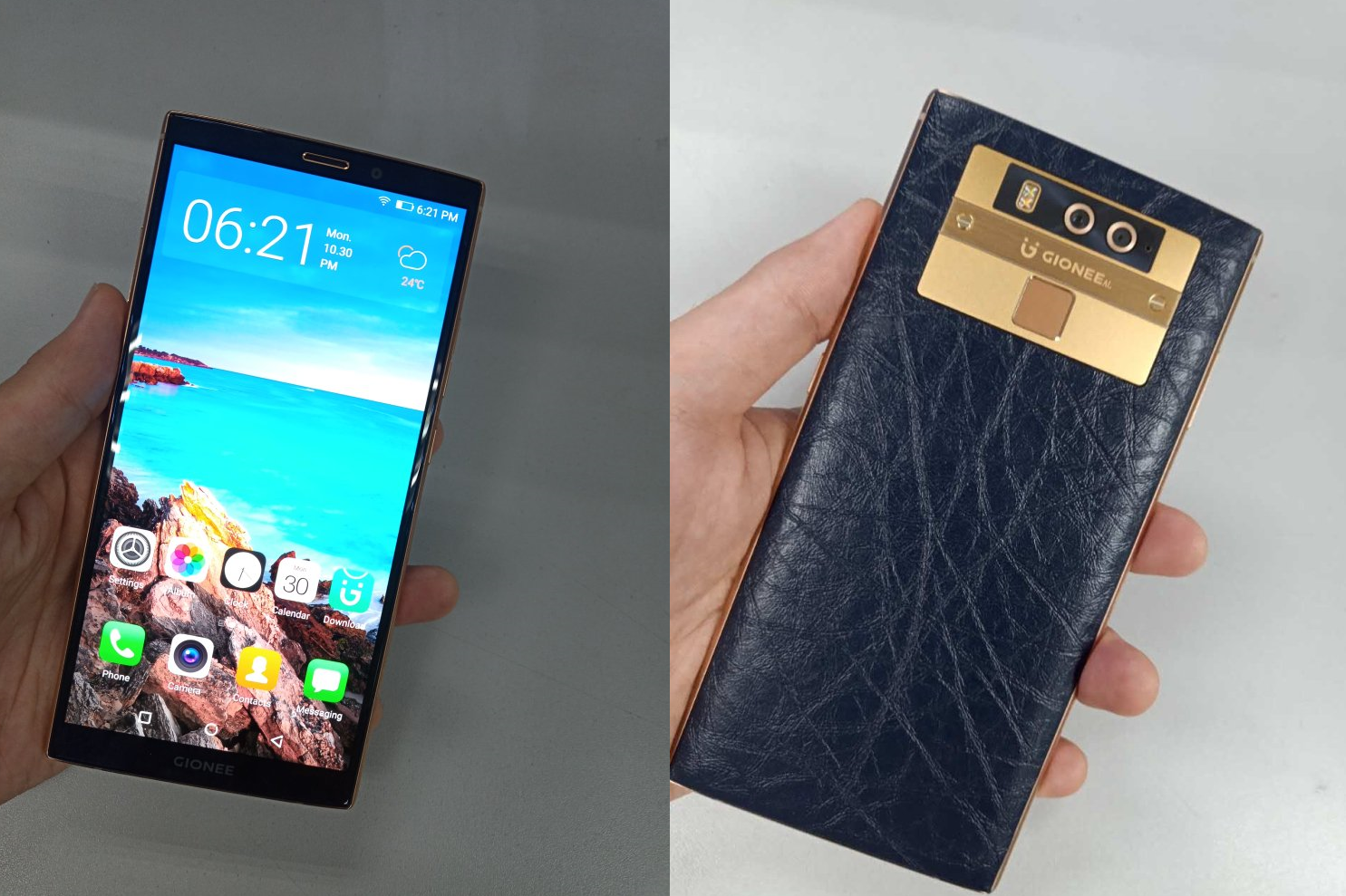
Well-known leakster Evan Blass has recently revealed that the Gionee M7 Plus is the flagship phone from the company. Blass did not reveal any details on the specifications of the phone, but has shared the following images to reveal its design.

Gionee M7 Plus

Read More: Gionee Launches The Steel 2 Plus As The M7 Power in Thailand

The Gionee F6L had appeared on TENAA in the previous week. It had revealed that the phone would be featuring a 5.7-inch HD+ display that will support an aspect ratio of 18:9. It may be driven by Snapdragon 430/435 chipset and may come in 3 GB and 4 GB RAM options.

The Gionee F205 was recently spotted on GFXBench with 5-inch HD+ display that produces an aspect ratio of 18:9. It will be fueled by MediaTek MT6739 chipset and 2 GB of RAM. The Gionee S11 and S11 Plus that have respectively appeared on GFXBench and TENAA are also coming with 18:9 display. These smartphones are going to be respectively powered by MediaTek MT6763 and Helio P25 chipsets.

The Gionee GN5007 that will be coming with a 6-inch HD+ screen the Gionee M2018 are also speculated to deliver an aspect ratio of 18:9. By launching 8 smartphones with full screen design, Gionee will have the most number of 18:9 aspect ratio supporting phones. We expect that the rumor mill will reveal more information on the upcoming 18:9 phones from Gionee in the coming weeks.

What's your view on the current trend of full screen design phones? Share us your thoughts by adding your comments below.

(source)


Source: Gionee to Announce 8 Bezel-less Phones on November 26

Saturday, November 4, 2017

India Gives China a Tough Competition in the Smartphone Market

You're reading Entrepreneur India, an international franchise of Entrepreneur Media.

Every month mobile companies launch a new model with competing features.  Factors like low smartphone penetration and increase in LTE availability have led to the growth of smartphone shipments in India. This also means that it is the best time for vendors to survive in the extremely competitive market like India.

According to a report by Canalys, India has left behind U.S. to become second largest smartphone market. The findings revealed that India has now overtaken the United States to become the world's second-largest smartphone market after China. 

Entrepreneur India takes a look at some other key highlights of the report:

  • Sales Top 40 million units for First Time: After a wobble in Q2 2017, India's smartphone market recovered quickly, with shipments growing 23% year over year in Q3 2017 to reach just over 40 million units. Samsung and Xiaomi, which shipped 9.4 million and 9.2 million units respectively, accounted for almost half of the total market as the top five vendors continued to post strong growth in Q3 2017.
  • A Major Relief to Smartphone Industry: "This growth comes as a relief to the smartphone industry. Doubts about India's market potential are clearly dispelled by this result," said Canalys Research Analyst Ishan Dutt.

  • Low Smartphone Penetration and the Explosion of LTE are the Main Drivers:"There are close to 100 mobile device brands sold in India, with more vendors arriving every quarter. In addition, India has one of the most complex channel landscapes, but with low barriers to entry. Growth will continue. Low smartphone penetration and the explosion of LTE are the main drivers."

  • Samsung Leads the Race: Despite posting excellent results, the market continues to concentrate, with the top five vendors (Samsung, Xiaomi, Vivo, Oppo and Lenovo) now accounting for 75% of total shipments in India. Samsung shipped 9.4 million smartphones, almost 30% more than in Q3 last year. Second-placed Xiaomi increased shipments by over 290% to 9.2 million units. 

  • Xiaomi Likely to Overtake Samsung: "Xiaomi's growth is a clear example of how a successful online brand can effectively enter the offline market while maintaining low overheads," said Canalys Analyst Rushabh Doshi. "But Xiaomi focuses on the low end. It struggles in the mid-range (devices priced between INR15,000 and INR20,000 [US$230 and US$310]), where Samsung, Oppo and Vivo are particularly strong. Nevertheless, the study predicts Xiaomi's continued go-to-market innovations will allow it to overtake Samsung within a couple of quarters."
  • iPhone Sales More Than Double: Apple began local production in India earlier this year, and its iPhone shipments more than doubled to 900,000 units in Q3 2017 compared with Q3 2016, impressive growth in a market that is skewed toward low-end smartphones.


  • Source: India Gives China a Tough Competition in the Smartphone Market

    Friday, November 3, 2017

    Nikon Shuts Down its China Factory Blaming Smartphones

    The rise of smartphones strikes hard at Nikon's main business, leading to the decision to shut Nikon Imaging (China) Co., Ltd, a factory focused on digital cameras and lens units.

    Nikon

    Nikon Imaging (China) Co., Ltd. manufactures imaging products such as digital cameras and components. The company was founded in 2002 and is based in Wuxi, China, operating as a subsidiary of Nikon Corp.

    Nikon, which it one of the world's largest camera and optics manufacturer, blames the ubiquitous smartphones for the closing of the Wuxi factory, which will see 2,200 employees dismissed.

    As stated by Nikon: "In recent years, due to the rise of smartphones, the compact digital camera market has been shrinking rapidly, leading to a significant decrease in operating rates and creating a difficult business environment".

    Now that smartphones are ridiculously popular and are equipped with extremely high-resolution cameras that can deliver well-polished images, it appears that there is no room for the compact camera market, doing away with this niche altogether. 

    As for the other plants: "The rest of the Company's manufacturing and sales subsidiaries in China remain in full operation, and continue proactively developing business and services in China".

    According to the press release: "The Company will focus more on high value-add products". The question is, what products are those? Will Nikon aim to focus more on their medical optical products and less on film-making related products?

    As reported previously on cinema5D, even though Nikon introduced the world's first video-capable DSLR in 2008, the company may have missed the chance of monetization in the  video DSLR and mirrorless camera market, opening the way for Canon and Sony to swoop in.

    What do you think? Does it seem that Nikon is abandoning the filmmaking community, or could the company have something up its sleeve? Tell us in the comments below!


    Source: Nikon Shuts Down its China Factory Blaming Smartphones

    Thursday, November 2, 2017

    OPPO Joins The Growing List of Potential “Foldable Smartphone Manufacturers”

    A lot of manufacturers have shown their interest in the development of a foldable smartphone and the likes of ZTE, Samsung, Huawei and most recently OPPO have all patented some sort of foldable smartphone. However, patenting a device is a very long way from actually producing the device hence we call them "potential foldable smartphone manufacturers". Recently, a patent by OPPO suggests that the Chinese company has worked on a foldable smartphone but OPPO's device is quite different from the previous foldable devices that we have seen.

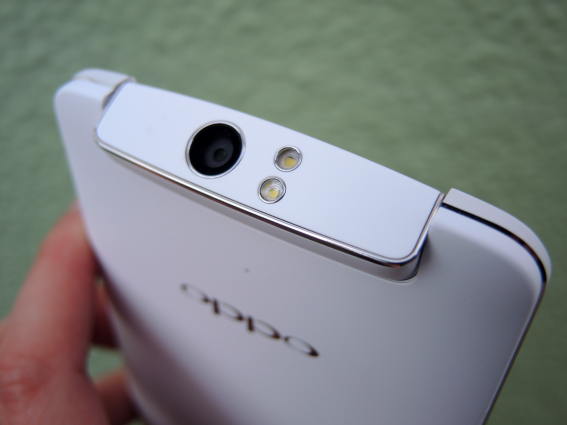
    From the patent, only about 25% to 35% of the top of the OPPO device can be bent and folded longitudinally. This means that this smartphone is somewhat similar to the OPPO N1 in which only a fraction of the camera can be folded such that a single camera can be used as both rear snapper and selfie shooter. The other patents from ZTE, Samsung, and Huawei appears to show 50% folding. Taking a close look at the patent document, the display lodges on top of a fixed chassis and some hinges connect the folding zone. this configuration means that the smartphone needs only a single camera module as it can be rotated at will to become either a selfie snapper or the main shooter of the smartphone.

    Like I said earlier, this is only a patent and there is no need to get our hopes high because this device may never see the light of day (many patented devices don't). As of now, other details of this smartphone are unknown.

    Related

    I'm a professional geologist and an enthusiastic writer who is interested in technology. I sleep and wake with my mobile phone, data connection on 24/7. My PC is never more than a metre from me.


    Source: OPPO Joins The Growing List of Potential "Foldable Smartphone Manufacturers"

    Wednesday, November 1, 2017

    HTC may reveal its China-bound stand-alone VR headset later this month

    Why it matters to you

    A possible launch during HTC's developer conference in Beijing could be a sign that its Daydream-based stand-alone VR headset will make a North American debut, too.

    HTC originally teased a stand-alone headset for virtual reality earlier this year during Google's developer conference. It will be based on Google's Daydream platform baked into Android, and Google's WorldSense technology that provides six degrees of freedom without the need for external sensors. HTC said it was also working directly with Qualcomm to produce a stand-alone VR headset for China without any ties to Google. Now we know more about the latter unit.

    Reports have surfaced that HTC will officially reveal its stand-alone VR headset for the Chinese market during its annual Vive Developer Conference in Beijing starting November 14, 2017. This model will be based on Qualcomm's VRDK developer kit packed with its Snapdragon 835 processor, and its inside-out positional tracking developed with Leap Motion for full-body movement in VR.

    In addition to the Snapdragon processor, Qualcomm's developer kit includes a single 2560 x 1440 AMOLED display, two built-in monochromatic global shutter cameras (1280 x 800) for motion tracking, two monochromatic VGA global shutter cameras for eye tracking, 4GB of system memory, and 64GB of storage. It also includes Wi-Fi and Bluetooth connectivity, and a Type-C port for charging the battery.

    According to Qualcomm, the inside-out motion tracking provides a better experience for mobile VR. While products like Samsung's Gear VR only track head movement (aka three degrees of freedom), it's new mobile VR platform also tracks your physical location in the real world (aka six degrees of freedom). And unlike the HTC Vive for PC, there are no external sensors tracking your movement, nor is there a physical tether to a PC. Even more, you don't need a smartphone.

    HTC's deal with Google to produce a Daydream-based stand-alone VR headset likely relies on the same developer kit, only Google has created its own method for tracking movement called WorldSense. Content will likely be distributed through Viveport and Google Play when the stand-alone unit arrives before the end of 2017. It also won't be sold in China, hence HTC's partnership with Qualcomm to produce a version specifically for that market.

    That said, the model shown during the conference on November 14 won't include Google's Android and Daydream platforms. But there's still a possibility that HTC will officially reveal its Daydream version in the United States at the same time. It may be marketed as Vive Eclipse or Vive Focus whereas the China-bound model may simply be coined as Vive M, or Vive Mobile.

    Virtual reality is about to become a bit more mainstream before the end of the year. As previously reported, both HTC and Lenovo are providing Daydream-based stand-alone models before December's end. Samsung is supposedly working on a stand-alone unit too while the Oculus Go headset is slated for early 2018. None of these units require a smartphone or external motion-tracking sensors.

    Meanwhile, VR headsets designed specifically for Windows 10 are making a splash. Five are now listed on Microsoft's online store selling for under $500, manufactured by Acer, Dell, HP, Lenovo, and Samsung. All support the new Windows Mixed Reality platform for virtual reality and augmented reality experiences and applications.

    Don't Miss

    Don't miss out: These six awesome laptop deals can save you up to $470

    Up Next

    Let's Enhance is a website that uses A.I. to add details to upscaled photos


    Source: HTC may reveal its China-bound stand-alone VR headset later this month