Monday, November 7, 2016

China’s Patent-Lawsuit Profile Grows

Updated Nov. 7, 2016 7:47 p.m. ET

HONG KONG—When a Canadian patent-licensing firm wanted to sue Japanese electronics company Sony Corp., it chose an unlikely venue: China.

Ottawa-based WiLAN Inc., which earns revenue by licensing its patents, filed a suit against Sony last week in a court in the eastern Chinese city of Nanjing, alleging that the Japanese company's smartphones violated its wireless-communication-technology patent, according to the filing reviewed by The Wall Street Journal.

WiLAN's lawsuit is a rare case of a foreign patent-holding entity suing a non-Chinese company in China. It is an indication of how China is becoming a more attractive place to seek legal action for companies that accumulate patents for litigation and licensing purposes. In China, lawsuits are less time-consuming and less costly than in the U.S. and the country's courts have developed rapidly over the past several years. If an injunction is granted in China, it wouldn't only apply to products sold i n the country using the patent in question, but also to the exports of such goods made in China, giving the plaintiff a possible bargaining tool for a licensing deal.

While China accounts for a small part of Sony's revenue, the Tokyo-based company makes many of its electronic products, including batteries, smartphones and television sets, in the country. A Sony spokeswoman declined to comment on the lawsuit, saying that the company can't discuss a continuing legal dispute.

WiLAN's lawsuit, filed through its subsidiary, alleges that some of Sony's smartphones have infringed on a patent related to the fourth-generation wireless-network-technology standard known as long-term evolution, or LTE.

WiLAN has entered into licensing deals with numerous technology companies around the world. For example, it has recently signed agreements with Mitsubishi Electric Corp. of Japan and ZTE Corp. of China that cover industrial-automation and wireless technology, respec tively, according to WiLAN's website.

The Canadian company's goal is to reach a licensing deal with Sony, said Erick Robinson, a China-based attorney at patent law firm Rouse, which is advising WiLAN in the Sony case.

"Three or four years ago, I wouldn't have advised any foreign company to file a patent lawsuit in China," because the country lacked an effective system for enforcing intellectual-property rights, Mr. Robinson said. In September, WiLAN filed a similar patent lawsuit against Sony in Germany. That lawsuit is pending trial.

Traditionally, the U.S. has been the global hub for such lawsuits, but in recent years, patent-licensing firms are looking for new places to bring lawsuits, lawyers and legal scholars say. While Germany is already becoming a popular venue for patent lawsuits because of its sophisticated and efficient court procedures, some potential litigants are also starting to consider filing their cases in China.

"This is pa rt of a world-wide phenomenon right now," said Joe Siino, president of San Francisco-based Via Licensing Corp., a Dolby Laboratories Inc. unit specializing in patent management and licensing.

The rapid progress in China is driven by Beijing's desire to promote homegrown technologies with the aim to protect the increasing number of patents Chinese companies own. Some of China's biggest technology companies, such as telecommunications-equipment makers Huawei Technologies Co. and ZTE, have already built up extensive patent portfolios. The number of Chinese patents issued in 2015 jumped 54% to 359,000, according to the State Intellectual Property Office.

While granting more patents, the Chinese government has also strengthened its patent laws in recent years and created courts that specialize in IP disputes.

For foreign technology companies that have already faced challenges in China because of stiff competition, this could mean additional legal challenges, lawyers say.

Chinese patent-holders are also taking advantage of the system. In May, Beijing's IP regulator ordered Apple Inc. to stop the sales of the iPhone 6 and iPhone 6 Plus in the city, ruling in favor of Shenzhen Baili Marketing Services Co. A shell company owned by defunct Chinese smartphone maker Digione, it had filed complaints alleging that the U.S. company infringed on its design patents.

The injunction hasn't been implemented because Apple has appealed.

Write to Juro Osawa at juro.osawa@wsj.com


Source: China's Patent-Lawsuit Profile Grows

Sunday, November 6, 2016

Samsung launches a new dual-display flip smartphone in China

Samsung first unveiled its plans of launching a new dual-display flip smartphone earlier this year. Now new reports suggest the company has officially launched their expected flagship in China at a starting price of 20,000 Yuan (approximately Rs 1.9 lakhs).

The dual-display flip smartphone named W2017 features a 4.2-inch Super AMOLED display with a full HD resolution of 1920 x 1080 pixels. The device is powered by a quad-core Snapdragon 820 SoC and will be running on Android 6.0.1 Marshmallow.

The W2017 smartphone offers 4GB RAM and 64GB of internal memory which is expandable up to 256GB via microSD.

On the camera front, the flip smartphone sports a 12MP rear camera with f/1.9 aperture and support for 4K video recording along with a 5MP front camera. Several reports also suggest the smartphone comes equipped with a rear mounted fingerprint scanner.

The smartphone is further packed with a 2300mAh battery and serves as the predecessor to Samsung's previous flagship – the W2016.


Source: Samsung launches a new dual-display flip smartphone in China

Saturday, November 5, 2016

Alipay Takes On Apple Pay And PayPal On Their Home Turf

Click to enlarge

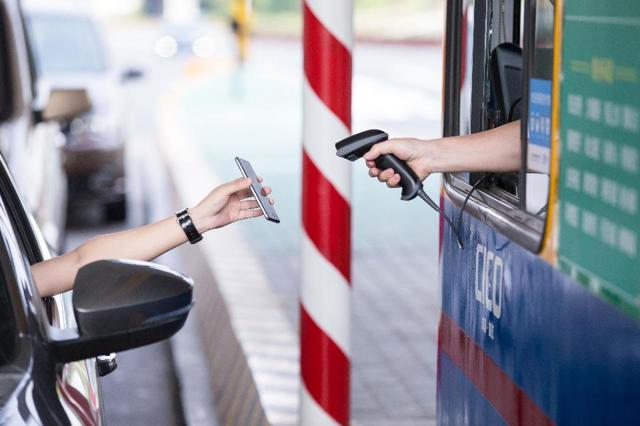
A driver uses his smartphone to pay the highway toll by way of Alipay in Hangzhou, China on September 21, 2016. (Photo credit STR/AFP/Getty Images)

Ten years ago, eBay (NASDAQ:EBAY) lost the battle to conquer China's e-commerce market to small upstart Alibaba (NYSE:BABA). Ten years on, China's e-commerce market has grown more than tenfold, and Alibaba has become a global conglomerate with its arms stretching across multiple disciplines such as payments, big data, Hollywood and more.

The game of e-commerce has also changed. With proliferating smartphones, e-commerce has become increasingly mobile. Euromonitor estimates that mobile commerce will amount to $972 billion by the end of this year. By 2021, mobile payments are expected to reach $3 trillion.

This is an area where American companies are falling behind. There is no clear market leader in the U.S. mobile payments industry. Apple Pay (NASDAQ:AAPL) may be the closest to being a leading player. PayPal is playing catch-up in mobile transactions. Their positions, however, may soon be challenged by Alipay, China's largest mobile payment service provider with 450 million users.

Alipay, originally created by Alibaba, and now a part of Ant Financial, is rapidly expanding its mobile payment service to Asia, Europe and now, to the United States. On October 24, it announced partnerships with payment processors First Data (NYSE:FDC) and Verifone (NYSE:PAY) as its official entry to the U.S. market.

The speed of Alipay's global outreach is breathtaking. Last month alone, more than 80,000 retailers in 70 countries signed up with the mobile payment system, and so did 10 international airports including Munich, Tokyo and Aukland. As the latest development, this past Friday DFS Group inked a deal with Ant Financial to launch Alipay at San Francisco International Airport.

Alipay's strategy is to target Chinese overseas tourists who have already become accustomed to using its mobile app back home. Last year, more than 120 million Chinese traveled abroad and spent nearly $200 billion.

Retailers around the world are also eager to embrace Alipay in order to court Chinese spenders. Alipay is now accepted at British luxury department stores Harrods and Selfridges. Before long, it will be at Macy's (NYSE:M) or Nordstrom (NYSE:JWN).

What's alarming is that Alipay seems to have no contenders. Apple Pay, PayPal, or any other U.S. payment service provider, powerlessly watched Alipay's whirlwind foray around the world and into the U.S. market without making any attempt to combat it. Their lack of action presents a startling contrast to Alipay's breakneck development.

Is Alipay only for Chinese tourists? I doubt it. Once it is widely accepted as a payment method in the U.S., Alipay will be in a position to challenge Apple Pay and PayPal. Currently, Alipay has already become popular in South Korea, Thailand, Hong Kong, Japan and Germany.

Ten years ago, Alibaba fought eBay cleverly and drove it out of China. Although eBay failed, it at least fought a fierce battle. This time around, however, Apple Pay and PayPal seem to have left the door wide open for Alipay to enter their home turf without even putting up a fight.

Mobile payments are the future. According to Euromonitor, by 2020, 46% of Americans will make purchases via mobile phones, compared to only 15% in 2015. If Apple Pay, PayPal, or any American payment company, wants to be relevant in the $3 trillion global mobile payments market, they must up their game and fast.


Source: Alipay Takes On Apple Pay And PayPal On Their Home Turf

Friday, November 4, 2016

Xiaomi Redmi 4, Redmi 4 Prime and Redmi 4A smartphones unveiled

All the variants of Redmi 4 features a 5-inch display and runs on Android Marshmallow OS.

After launching Mi Note 2 and Mi Mix smartphones last month, Xiaomi has now launched three different variants Redmi 4 smartphone in China yesterday, named as Xiaomi Redmi 4, Redmi 4 Prime and Redmi 4A. The Redmi 4 and Redmi 4 Prime are priced at CNY 699 (approximately Rs. 6,910) and CNY 899 (approximately Rs. 8,887) respectively and comes in gold, silver, and dark gray colour options. Both Redmi 4 and Redmi 4 Prime are already up for pre-order and will go on sale starting from Monday, November 7. Whereas Redmi 4A is priced at CNY 499 (approximately Rs 4,933) and will go on sale on November 11.

Xiaomi Redmi 4 specifications

The Xiaomi Redmi 4 features a 5-inch HD (1280 x 720 pixels) 2.5D curved glass display and is powered by a 1.4GHz Octa-Core Qualcomm Snapdragon 430 64-bit processor. with Adreno 505 GPU. It comes with 2GB RAM and 16GB internal storage, which can be further expandable up-to 128GB via microSD card. The smartphone runs on Android 6.0 Marshmallow operating system wrapped under MIUI 8 and is backed up by a 4,100 mAh powerhouse battery.

The Redmi 4 flaunts a 13-megapixel shooter with dual LED Flash, PDAF, f/2.2 aperture on its back, and a 5-megapixel front-facing camera for selfies. The smartphone also offers a fingerprint scanner, which is placed on its back panel and has Infrared sensor too. Besides, the smartphone offers Hybrid Dual SIM, 4G with VoLTE, WiFi (802.11 a/b/g/n), GPS, Bluetooth 4.1, and a microUSB port. The handset measures 141.3×69.6×8.9mm and weighs around 156 grams.

Xiaomi Redmi 4 Prime specifications

The Xiaomi Redmi 4 Prime offers a 5-inch full HD (1920 x 1080 pixels) 2.5D curved glass display and comes equipped with 2GHz Octa-Core Snapdragon 625 processor, clubbed with Adreno 506 GPU. It comes with 3GB RAM and 32GB internal storage, which can be further expandable up-to 128GB via microSD card. The main camera of Redmi 4 Prime comes with a dual-tone dual-LED flash, where as Redmi 4 has dual LED Flash. Rest of the specifications of Redmi 4 Prime are identical to the above listed Redmi 4 smartphone.

Xiaomi Redmi 4A specifications

The Xiaomi Redmi 4A features 5-inch HD display with 720 x 1280 pixels resolution and is powered by a 1.4GHz Snapdragon 425 processor, which is paired with Adreno 308 GPU. It comes with 2GB of RAM and 16GB of internal storage, and expandable storage up to 128GB via microSD. The Redmi 4A gets its strength from decent 3,120 mAh battery and runs on Android 6.0 Marshmallow operating system wrapped under MIUI 8.

On the camera front, the Redmi 4A sports a 13-megapixel rear camera with PDAF, LED Flash, f/2.2 aperture on its back, and a 5-megapixel front-facing camera for selfies. Besides the smartphone offers Hybrid Dual SIM, 4G with VoLTE, Wi-Fi (802.11 b/g/n), Bluetooth 4.1, GPS, and a microUSB port. The handset measures 139.5×70.4×8.5mm and weighs 131.5 grams. The Redmi 4A comes in Gold and Rose Gold colour variants.


Source: Xiaomi Redmi 4, Redmi 4 Prime and Redmi 4A smartphones unveiled

Thursday, November 3, 2016

LeEco smartphone spotted at TENNA, might be Dual3

One of the interesting smartphone makers from China, LeEco has came again in lights when its another Android-based smartphone was spotted at TENNA certification in Coffee Gray and Gold Charm colour variants. Soon after introducing the LeEco Le Pro3 and Le S3 handsets the company is gearing up to unveil another beast in the smartphone market.

Named as 'LeEco Le X850' the smartphone was certified at TENNA recently, and it is being touted that the handset boasts high-end specifications. As per the listing, the next LeEco phone will be featured with a 5.7-inch QHD (2560 x 1440) display, along with 4GB of RAM and 64GB of internal storage.

Powered by a Snapdragon 821 64-bit quad-core processor with Adreno 530 GPU, the LeEco Le X850 will be fueled with a 3,900mAh of battery. The TENNA listing also confirms that the smartphone will sport dual 13-megapixel of rear cameras and a 16-megapixel of front-facing camera. The device measures 157.25 x 77.95 x 7.99mm, while it weighs 185 grams.

TENNA didn't reveal the image of this handset, however, by knowing the weight of the smartphone it could be assumed that the it might be build of metal.

Based on previous leaks, the LeEco Dual3 smartphone was touted to be launched soon with a dual rear camera setup. Hence, it could be assumed that the LeEco Le X850, listed at the certification is aka Dual3. The earlier speculations suggested that the LeEco Dual3 smartphone will be powered by a Snapdragon 821 chipset, which also suggests that the Le X850 is Dual3.

Source: Android Headlines

Tags: leak, LeEco, LeEco Dual3, LeEco X850, smartphone, TENNA
Source: LeEco smartphone spotted at TENNA, might be Dual3

Wednesday, November 2, 2016

Only 12% of smartphones shipped last quarter ran iOS

161010-iphone-7-review-malaysia-09

According to market researcher Strategy Analytics, Apple's iOS lost ground last quarter as their market share for smartphones shipped in Q3 2016 dipped 1.5% to 12.1% compared to the year before. That means only a little more than 1 in every 10 smartphones shipped were iPhones.

In a press release, Strategy Analytics revealed that although the global smartphone market grew 6% annually, the biggest winner was Android, who captured 87.5% of the market share last quarter. That's a growth of 3.4% annually.

Strategy Analytics director Woody Oh attributes a lot of this success to Androids low-cost services and user-friendly software which remain attractive to hardware makers, operators and consumers worldwide. Unfortunately, things aren't so cut and dry for the little green robot.

One of their big challenges still comes in the form of the fact that the platform is "overcrowded with hundreds of manufacturers", few of which actually turn a profit.

To make matters worse, Google's recent smartphone launch — the Google Pixel and Pixel XL — is an attack on the very hardware partners that made Android popular in the first place. Not only do they have to compete with other operating systems, they also have to compete with themselves.

Still, the fact that the total number of Android devices shipped grew by 10% year-on-year, compared to iOS' drop of 5.2%  (due to "lackluster performance" in China and Africa), is positive news for Google's operating system.

What about BlackBerry and Windows Phone, you ask? Well, according to Strategy Analytics, these two operating systems have "all but disappeared" from the market.

[SOURCE, VIA]

Related


Source: Only 12% of smartphones shipped last quarter ran iOS

Tuesday, November 1, 2016

Toddler in China killed while mother checks her phone

Social media users in China have expressed outrage after the emergence of a video clip of a toddler run over and killed by an SUV driver while her mother was too distracted by her smartphone to notice.

The CCTV footage, shared widely online, captured the horrific moment when the toddler was hit and run over by the car while her mother walked behind the girl, engrossed by her phone.

The girl reportedly died at the scene.

The death of the girl, referred to as Tutu by Chinese media, has sparked anger and sadness in China, as well as pronouncements about the nation's obsession with social media and technology.

Even a local government agency had weighed in to the debate, urging people to cut back on smartphone use.

"Heart-wrenching! Put down your phone. Save the children!," the Shandong provincial prosecutor's office wrote on Weibo, the equivalent of Twitter in China.

"If the mobile phone was so much fun, then why had you given birth to the child?" asked web user "Xiaodingdangmaimaijimiqiu".

"It is a bloody lesson. Everyone should be alerted not to play with a smartphone while walking. God knows how regretful the mother is," a netizen in the username of "freeermiao" wrote on China's twitter-like microblog Weibo.

The tragedy comes only six months after a similar incident in east China's Anhui province in which a two-year-old boy ran on to a road while his mother was on her mobile phone, was hit and killed by a car.

In August, 2015, a a boy was hit and killed by a car in a parking building while his mother was checking her phone.

The New York Times reported  that Chinese have documented and publicised the risks of calling or texting while driving.

In 2014, Shanghai police said that calling or texting while driving had caused nearly 30 per cent of the 690 fatal automobile accidents between January and October of that year, the paper noted.

The city's police installed high-definition traffic cameras to identify motorists who use smartphones while driving, with offenders fined 200 renminbi, or around $A39, and penalised through a points system.


Source: Toddler in China killed while mother checks her phone