Wednesday, March 8, 2017

Samsung remains world's No.1 smartphone seller in 2016: data

SEOUL, March 9 (Yonhap) -- Samsung Electronics Co. was the biggest seller of smartphones in 2016, followed by Apple Inc. and China's Huawei, industry data showed Thursday.

Samsung sold 308.5 million units of Galaxy series smartphones last year, according to the statistics by industry tracker Strategy Analytics.

The comparable figure for Apple Inc.'s iPhone smartphones was 215.5 million and those for Huawei's Honor and Ascend series 72.2 million and 65.7 million each.

China's Shaomi came fifth with 46.4 million units.

China's OPPO sold 38.4 million units of R series smartphones while another Chinese brand Vivo sold 33.7 million X series and 25.6 million Y series smartphones last year.

Most Chinese smartphones are priced between 300,000 won (US$259) and 600,000 won, although Huawei introduced P10 smartphones priced at about 800,000 won at this year's Mobile World Congress in Barcelona, Spain. The P10 aims to make inroads into the global premium smartphone markets, the SA data showed.

"Chinese smartphone producers need to strengthen their premium phone lineups to catch up with Samsung and Apple," an industry source said.

Apple Inc., meanwhile, had US$44.9 billion in operating profit last year, 79.2 percent of the total global smartphone profits of $53.7 billion, the SA figures said.

Apple's operating profit margin stood at 32.4 percent last year.

Samsung Electronics Co.'s smartphone business posted an operating profit of $8.3 billion last year, accounting for 14.6 percent of the global profits.

Samsung's operating profit margin stood at 11.6 percent last year.

Profitability at Chinese smartphone makers is still low, although their cheaper handsets are rapidly gaining market share.

Huawei posted an operating profit of $929 million last year, accounting for 1.6 percent of global profits. OPPO took 1.5 percent of the global profits, while its rival Vivo accounted for 1.3 percent.

hdh@yna.co.kr

(END)


Source: Samsung remains world's No.1 smartphone seller in 2016: data

Tuesday, March 7, 2017

China’s ZTE pleads guilty, settles US sanctions case for nearly $900 mn

BusinessPosted at: Mar 8, 2017, 11:52 AM; last updated: Mar 8, 2017, 11:52 AM (IST) New York/Hong Kong, March 8

NEW YORK/HONG KONG: Chinese telecom equipment maker ZTE Corp has agreed to plead guilty and pay nearly $900 million in a US sanctions case, drawing a line under a damaging scandal that had threatened its cut off its supply chain.

While the fine was larger than expected, ZTE, also a major smartphone maker, reported robust underlying earnings for 2016 and was upbeat in estimates for the first quarter. That and the resolution of the case helped its Hong Kong-listed shares surge 6 percent.

A five-year investigation found ZTE conspired to evade US embargoes by buying US components, incorporating them into ZTE equipment and illegally shipping them to Iran.

In addition, it was charged in connection with 283 shipments of telecommunications equipment to North Korea.

"ZTE Corporation not only violated export controls that keep sensitive American technology out of the hands of hostile regimes like Iran's, they lied ... about their illegal acts," US Attorney-General Jeff Sessions said in a statement.

ZTE relies on US suppliers for 25 per cent to 30 per cent of its components, many of which are key to its goods. It purchases about $2.6 billion worth of components a year from US firms, according to a company spokesman. Qualcomm, Microsoft and Intel are among its suppliers.

"ZTE acknowledges the mistakes it made, takes responsibility for them, and remains committed to positive change in the company," ZTE Chief Executive Zhao Xianming said in a statement.

The company agreed to a seven-year suspended denial of export privileges, which could be activated if there are further violations, as well as three years of probation, a compliance and ethics programme, and a corporate monitor.

It also agreed to an additional penalty of $300 million that will be suspended during the seven-year term on the condition the company complies with requirements in the agreement.

When asked about the ZTE case, Chinese Foreign Minister Wang Yi said relevant departments of the government would continue to pay attention as to whether Chinese firms were receiving fair treatment.

"The Chinese government consistently opposes foreign governments putting unilateral sanctions on Chinese companies.

At the same time, we have always asked our companies to operate legally abroad," he told a news conference without elaborating.

Tim O'Toole, a Washington D.C.-based lawyer with Miller & Chevalier specialising in sanction cases, said US court documents suggest ZTE's attempts to obstruct the investigation were the main reason for a penalty significantly higher than in similar cases.

"What seems really important to US regulators is whether a company or individual after the investigation starts is seen to continue to evade the sanctions and also obstruct the investigation," he said.

The investigation, spearheaded by the US Department of Commerce, followed reports by Reuters in 2012 that ZTE had signed contracts to ship millions of dollars worth of hardware and software from some of the best-known US technology companies to Iran's largest telecoms carrier.

Last year, the Commerce Department released internal documents showing senior ZTE executives instructing the company to carry out a project for dodging export controls in Iran, North Korea, Syria, Sudan and Cuba.

ZTE has replaced executives allegedly involved, including naming a new president.

The company said on Wednesday it slid to a preliminary net loss of 2.36 billion yuan ($342 million) in 2016, its first loss in four years, due to the settlement.

But without the fine, it would have logged 3.8 billion yuan in profit, 18 percent higher than a year earlier. That was better than expected, as was a preliminary estimate for the first-quarter net profit rising between 21 and 31 percent, said Cindy Lam, an analyst with UOB Kay Hian in Hong Kong.

The settlement includes a $661 million penalty to Commerce; $430 million in combined criminal fines and forfeiture; and $101 million paid to the Treasury's Office of Foreign Assets Control (OFAC). The action marks OFAC's largest-ever settlement with a non-financial entity.

The Commerce Department will recommend ZTE be removed from a  list of entities that U.S. firms cannot supply without a license if it lives up to its deal and a court approves its agreement with the Justice Department.

First placed on the list in March 2016, it has continued to do business with U.S. suppliers under a temporary general license that has been extended several times, with the latest reprieve expiring March 29.

The company's guilty pleas, which must be approved by a judge, will take place in US District Court in Texas. — Reuters


Source: China's ZTE pleads guilty, settles US sanctions case for nearly $900 mn

Monday, March 6, 2017

Midas touch: China's tech, financial firms eye virtual gold rush

By Muyu Xu and Adam Jourdan

BEIJING/SHANGHAI (Reuters) - China's virtual gifting market, typically the domain of plugged-in young consumers celebrating special occasions or flirting, is luring major financial institutions keen to boost trade of another auspicious commodity: gold.

Tencent's digital gold packets, known as "microgold", are backed by the country's biggest bank, Industrial and Commercial Bank of China (ICBC) <601398.SS>. They allow users to send funds that track the real-time value of gold to friends over the firm's popular messaging platform WeChat.

It's a financial innovation on the concept of virtual gifts, such as digital roses and chocolates, more commonly used in online communities and which have more sentimental value than any tangible economic worth.

For financial institutions, China's booming virtual goods and smartphone-driven exchanges offer new markets to boost trading volumes in everything from banking services to gems.

ICBC, in an internal memo seen by Reuters and sent to staff on Friday, said the WeChat microgold platform had helped drive "explosive growth" in new gold accounts.

Over the recent Lunar New Year period, WeChat users sent 70,000 microgold packets worth just under 100 million yuan (11.85 million pounds) across the chat platform, the ICBC document said. It expects over 300,000 new gold accounts to be opened as a result of the Tencent tie-up. Neither ICBC nor Tencent were immediately available for comment.

While the volumes are relatively small, the take-up of similar virtual products on the WeChat platform suggests room for growth.

The gold packets are based on WeChat's popular virtual red envelopes, or digital "hongbaos", that also allow users to send funds to friends, albeit of a fixed nominal cash amount. Over the Lunar New Year period, users gifted 46 billion virtual red envelopes over WeChat.

For many Chinese, the yellow metal has both emotional and economic significance.

A Tencent user who goes by the name Liri Kuangjiu posted he had sent 1.3 grams of virtual gold and 520 yuan in a digital hongbao to his girlfriend.

"The money isn't much but it's a matter of affection," he said.

Kong Lingxin, a 20-year-old student from the northern city of Tianjin, uses her smartphone to buy, gift and hoard gold online.

Kong has spent 10,000 yuan ($1,452.88) of her savings on gold derivative products this year on Alibaba Group Holding Ltd-linked platform "Cun Jinbao" - literally "store golden treasure".

"My family has a history of collecting gold bars, which influenced my choice of investment," said Kong. "I chose an internet platform because it's easy to track gold prices, see your profits and make trades."

GOLD DEMAND

Gold analysts said the push by tech firms into the sector, though still at an early stage, had potential longer-term to stir up a sluggish Asian market if it caught on.

"It will become a support for gold demand and the gold price if WeChat gold packets become popular, considering the amount of traditional red envelopes users send," said Guotai Junan gold analyst Xie Qingpeng.

Beijing has taken note of the trend. The Ministry of Industry and Information Technology (MIIT) issued a guideline last week, calling for tech to play a bigger role in gold trading.

China's millennial consumers, loosely defined as those born between 1980 and 2000, are seen as the drivers of future growth in everything from retail to housing.

They make up over 60 percent of internet-based gold trading, according to a September report issued by G-banker, an online gold-trading platform backed by venture capital firm Softbank China Venture Capital and Alibaba.

Amid a property price spike, gold offers younger buyers a more affordable and accessible investment.

"It's nearly impossible for young people to invest in property in first tier cities in China. Alternatively, they put small amounts into gold, as a low risk investment," said Helen Lao, Singapore-based metals analyst at Argonaut Securities.

(Reporting by Adam Jourdan; Editing by Sam Holmes)


Source: Midas touch: China's tech, financial firms eye virtual gold rush

Sunday, March 5, 2017

After Samsung Galaxy C9 Pro launch in India, Galaxy C5 Pro spotted in China

Samsung Mobile India recently launched a rather odd combination of hardware, design and price back in September, 2016 and it was called the Samsung Galaxy C9 Pro. It featured great specifications like 6GB RAM and a 6-inch display along with a premium design at a high asking price.

Soon after we also began to see leaks around a smaller version of the same handset called the Galaxy C5 Pro. While we have only witnessed it on paper so far, it just so happens that someone spotted this mid-range beauty at a Samsung event in China and here are the details.

The smartphone indeed looks identical to its bigger sibling and carries the same design DNA as on the C9 Pro, in a smaller and more compact package. This would include a glass front, surrounded by an all-metal unibody. The unit showcased on display at the Samsung Forum 2017 as reported by SamMobile, sported a matte black finish with clear markers on the display table hinting that it is indeed the C5 pro.

Image: Twitter (Source: @mmddj_china)

Image: Twitter (Source: @mmddj_china)

Image: Twitter (Source: @mmddj_china)

Coming to the specifications, the handset is powered by a Snapdragon 625 SoC that is balance of power and battery life. It is paired with 4GB RAM and 64GB of internal storage with storage expansion. On the front, we have a 5.2-inch Full HD Super AMOLED display with 16MP camera on the front and the rear.

The product listing at the stall reveals a CNY 2,499 price tag that roughly converts to Rs 25,000 which seems to be a better deal over the massive C9 Pro that is priced at Rs 36,900 in India.

Tags: Samsung, Samsung China, samsung forum, Samsung Galaxy C5 pro, Samsung Galaxy C5 pro design, Samsung Galaxy C5 pro price, Samsung Galaxy C5 pro specifications, Samsung India, Samsung Mobile


Source: After Samsung Galaxy C9 Pro launch in India, Galaxy C5 Pro spotted in China

Saturday, March 4, 2017

Smartphone Fast Charging Speed Comparison: Huawei vs OPPO vs Vivo vs Samsung vs Apple

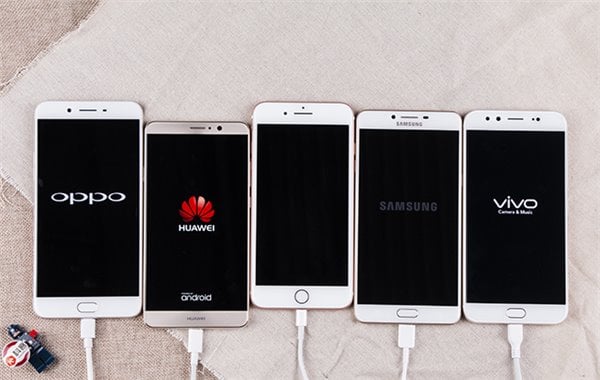
The battle line is drawn, but this is no Shuai jiao contest, neither is it your favorite Wrestlemania or Boxing bout. Instead, this a comparison of the speed of the fast charging technologies featured on the smartphones of the top five global smartphone companies. In case you've forgotten, Samsung, Apple, Huawei, OPPO and Vivo occupy the top 5 spots in terms of mobile phone shipments globally for 2016. While Samsung, Apple and Huawei had built formidable reputations for themselves over the years, OPPO rode on the back of its VOOC fast charge technology on the OPPO R9 to help shore up its sales, the result of which is still being felt today. Fellow Chinese co-traveller Vivo also has fast charging technologies which is one of its main selling points.

fast-charging-2

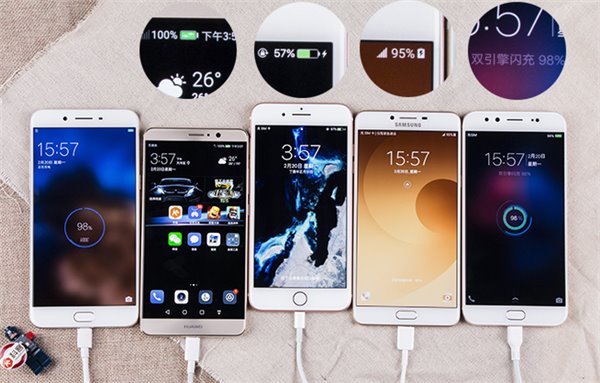
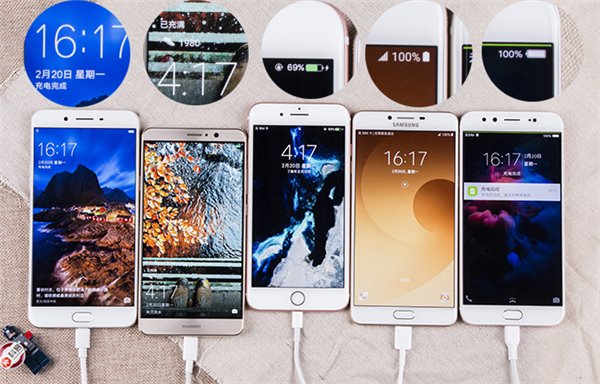
So, the fast charging feature onboard the Samsung Galaxy C9 Pro, Huawei Mate 9, OPPO R9 Plus and Vivo X9 Plus are put to test, all at the same time and the same battery level (0%) to determine which one actually charges faster. To set the records straight, the Galaxy C9 Pro, Mate 9, R9 Plus and X9 Plus, all have 4,000mAh battery capacity, while the iPhone 7 Plus comes with a 2910mAh battery. We must also point out that the iPhone 7 Plus doesn't come with fast charging support but then, it is one of the top selling and most expensive smartphones so it squares up against the others.

fast-charging-3

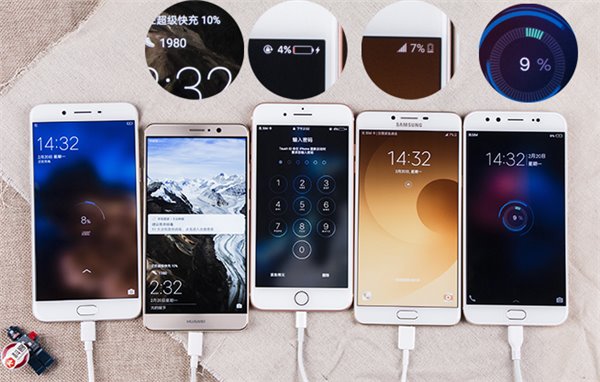
After 5 minutes of charge, OPPO R9S Plus was able to attain 8% battery capacity while the Huawei Mate 9 got 10%, the highest level of the lot. The Apple iPhone 7 Plus was just at 4%, the Samsung Galaxy C9 Pro at 7% and the Vivo X9 Plus surprisingly was at 9%.

fast-charging-4

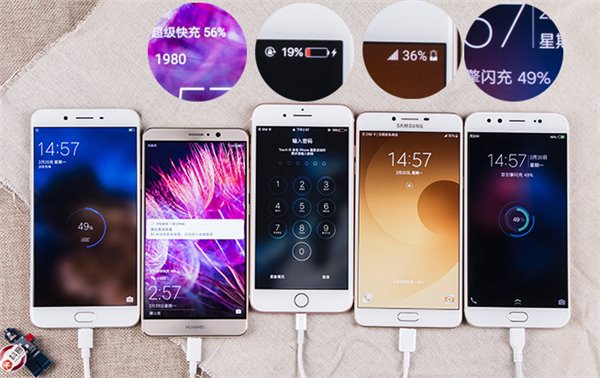
In 30 minutes, the Huawei Mate 9 with its innovative fast charging technology was well ahead at 56%, the R9 Plus and Vivo X9 Plus was trailing at 49% apiece, the Galaxy C9 Pro at 36% and finally the iPhone 7 Plus was only at 19%.

fast-charging-5

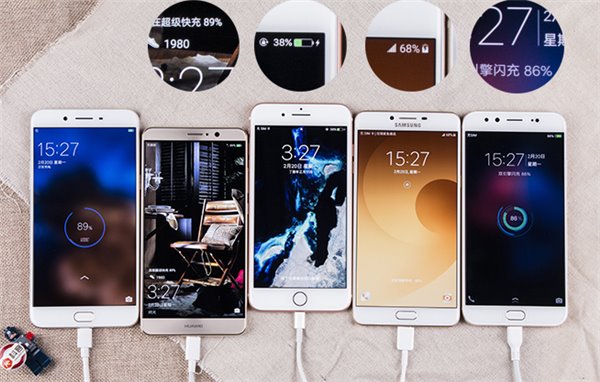
In 60 minutes, the Mate 9 and R9 Plus were both at 89% while the X9 Plus had gotten to 86%. The Samsung galaxy C9 Pro was trailing at 68% and then the iPhone 7 Plus at 38%. Obviously, Apple iPhones don't come with fast charge support and that really has no effect on sales, but it sure would have made a lot of difference to add that to their selling points.

fast-charging-6

At 90 minutes, only the Huawei Mate 9 had attained full 100% charge, an applaudable feat. The OPPO R9 Plus was very close by at 98% of charge, the Vivo X9 Plus was also at 98% while the Galaxy C9 Pro was at 95%. The iPhone 7 Plus was still lagging behind at 57% even when it had a smaller battery capacity.

fast-charging-7

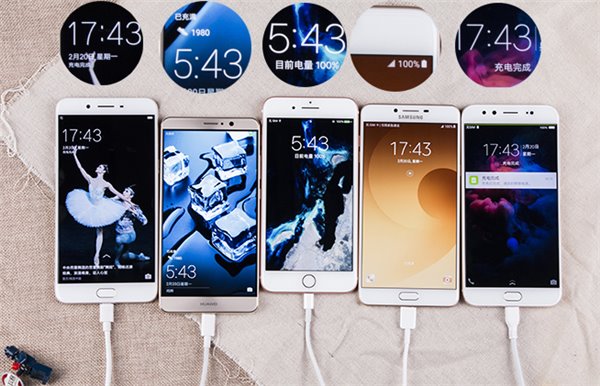
The test allowed the charge time to extend to 150 minutes and in that time, the Mate 9 and R9 Plus had stopped charging. The Vivo X9 Plus and Galaxy C9 Pro had also reached 100% in 150 minutes, while the Phone 7 Plus was only at 69%.

fast-charging-8

The test had to be stretched to 190 minutes, that is 3 hours and 10 minutes before the iPhone 7 Plus charged up to 100%. That is quite slow, but with an efficient Apple A10 chip onboard, the battery isn't expected to drain as fast as the others.

Related: Huawei Mate 9 Super Charge Tested: Super Fast charging Technology

fast-charging-9

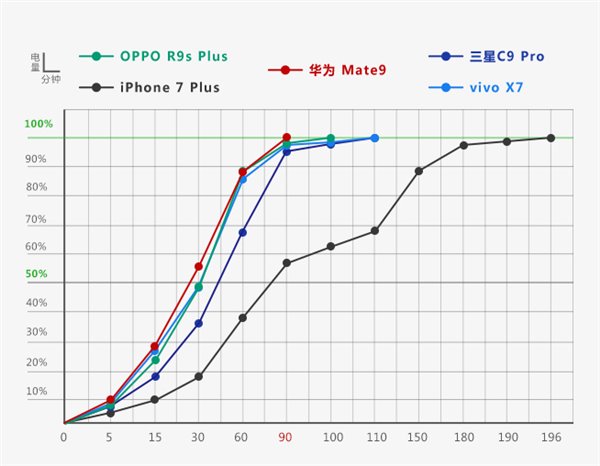
From the graph based on the fast charge test results, the Huawei Mate 9 with the steepest curve has the most efficient fast charge technology. This is followed by the OPPO R9 Plus and its VOOC fast charge technology. OPPO and Vivo are from the same parent company, so it is no surprise that the Vivo X9 Plus has almost similar charge pattern. The Galaxy C9 Pro followed closely and finally the iPhone 7 Plus came quite a distance behind the quartet.

Always be the first to know. Follow us:
Source: Smartphone Fast Charging Speed Comparison: Huawei vs OPPO vs Vivo vs Samsung vs Apple

Friday, March 3, 2017

TCL Communication partners with Blackberry to roll out BlackBerry’s new KEYone smartphone at MWC

LAS VEGAS and SHENZHEN, China, March 3, 2017 /PRNewswire/ — TCL Communication, one of the world's leading mobile device makers, caught the attention of industry insiders, the media and booth visitors at this year's Mobile World Congress (MWC) in Barcelona, Spain, with its new product releases at the event, including the BlackBerry KEYone, the Alcatel A5 LED, the high-definition Alcatel A3 and the easy-to-use Alcatel U5 smartphones as well as the 2-in-1 Alcatel PLUS 12 tablet.

MWC, the world's biggest and most influential mobile industry event, which, this year, took place from February 27 to March 2, gives the industry's leading players a once-a-year opportunity to showcase their latest mobile technology solutions. TCL Communication Technology Holdings Limited, one of the active advocators of 5G technology, and the Hong Kong Applied Science and Technology Research Institute jointly showcased the interoperability of software-defined radio user equipment (UE) and commercial TD-LTE small cell base stations, illustrating TCL's commitment to the next generation of development in the world of mobile telecommunications.

The BlackBerry KEYone smartphone — it smartly keeps legacy features beloved by Blackberry users, yet goes miles beyond the traditional Blackberry device

TCL Communication launched the BlackBerry KEYone smartphone on February 25 following the inking of a licensing agreement with BlackBerry in late 2016. TCL chairman and CEO Tomson Li said that BlackBerry licensed its security software and service suite, as well as related brand assets, to TCL Communication, who would design, manufacture, sell and provide customer support for BlackBerry-branded mobile devices. The latest BlackBerry product is one of TCL's highlights at MWC. The new product became an instant hit as soon as it was launched and received nine awards from media organizations, making it one of the most highlighted products at MWC.

The BlackBerry KEYone receved its first honor, the Top Picks award, from the authoritative UK-based technology media brand Tech Advisor, at the MWC. It was also the first award that Tech Advisor gave out at the event.

KEYone is turning the way the keyboard on a smartphone is normally used on its head by combining the touch screen with a physical keyboard, providing users with a large input space in comparison to what one gets with the standard 5.5-inch full-touch-screen smartphone. By combining the smart keyboard with the popular touch gesture recognition and BlackBerry's traditional touchpad features, the device allows users to browse web pages, check emails as well as input and send messages by touching the keyboard in a more convenient and intuitive way. KEYone was awarded the Best of MWC 2017 by Pocket-lint, the largest independent product evaluation platform in the UK, for its unique design. Pocket-lint commented that one of the positive results of the brand licensing tie-up between BlackBerry and TCL is that the KEYone continues the legacy and spirit of BlackBerry by preserving the classic full keyboard that is favored by loyal BlackBerry users.  

KEYone stands out with its iconic BlackBerry design and security features. The new smartphone is designed with unwavering attention to detail from the ground up in terms of the security and performance aspects that are so important to users. It delivers the most secure user experience available among Android-based smartphones in the market by running on a reinforced operating system and the proprietary technology behind the design of the security key. Besides the unique design and the security features, the phone's additional functionalities are expected to reshape the mobile communication experience for business, government and corporate users. Powered by a 3,505 mAh battery, the highest capacity among existing BlackBerry devices, the BlackBerry KEYone delivers a measurably longer standby time. In addition, the battery can reach a 50% charge within 36 minutes with the support of the Qualcomm® Quick Charge™ technology. Time-pressed users can choose BlackBerry's Boost chargi ng option for a quick charge enabled with the turbo boost technology. With these advantages, KEYone won the Best Business Hardware Award from IT Pro, a leading IT website in the UK, at the start of the event.

TCL chairman and CEO Tomson Li gives his prediction of where the industry is headed: 5G technology is the future of mobile

TCL Communication showcased the interoperability of software-defined radio UE and commercial TD-LTE small cell base stations at the MWC. As 5G telecommunication technology gradually takes root worldwide, software-defined radio can be expected to play an increasingly important role in driving software-driven telecommunication systems. This offers developers the flexibility and reusability of upgrading applications and systems, without the need to replace hardware components every time there is a software upgrade. The demonstration shows how the Open Air Interface (OAI) UE can receive a live downlink video stream from China-based telecommunication network optimization products manufacturer Sunnada Communications' commercial TD-LTE small cell. OAI is a leading open-source software that emulates LTE systems on general purpose processor platforms.

Mr. Li said in an interview that he is optimistic about 5G technology and believes 5G products and technology will be the trend of the future. TCL Communication has already foreseen the trend and undertaken a substantial amount of R &D in anticipation of the next generation of 5G technology. Although no mature 5G products have yet appeared, relatively mature development platforms have already been established. Manufacturers such as TCL Communication are able to demonstrate 5G technology for partners. The TCL chairman and CEO concluded with conviction: the 5G era is just around the corner.

According to telecommunications research firm International Data Corporation (IDC) and TCL's own data, the firm ranked No.7 among both handset manufacturers and tablet manufacturers worldwide in the 4th quarter of 2016, with a portfolio of products sold in China and over 160 countries and regions throughout North America, Latin America, Europe, the Middle East, Africa and the Asia Pacific. In the UK, Australia and New Zealand, the company ranked third in terms of handsets market share.

Li said this is TCL's 10th time at the MWC. He is deeply impressed by the rapid development of China's mobile communication sector. From mobile phones and devices to the number of users on the networks of China's mobile operators, Chinese manufacturers have moved to the front of the line and are increasingly becoming a leading force in the world's mobile communications industry.

SOURCE TCL Corporation

Like this:

Like Loading...

Related


Source: TCL Communication partners with Blackberry to roll out BlackBerry's new KEYone smartphone at MWC

Thursday, March 2, 2017

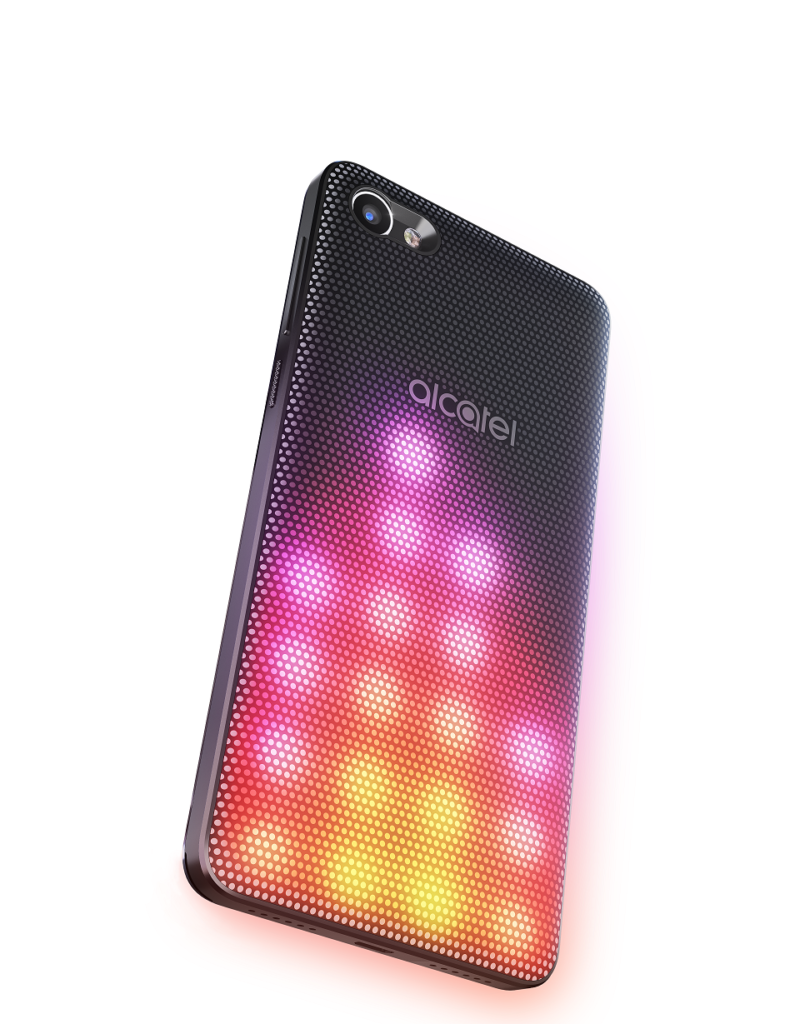
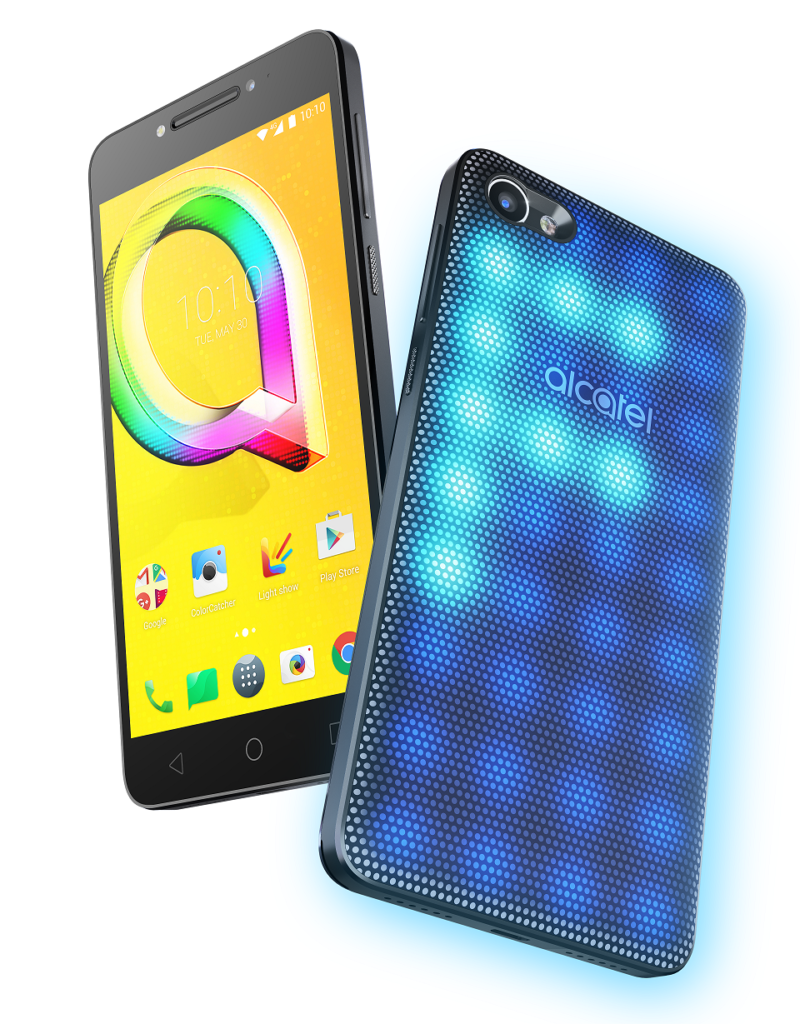
Alcatel A5 LED Hands On: The world’s first interactive LED-covered smartphone

The most interesting phone Alcatel had to show at MWC was the Alcatel A5 LED model.alcatel a5 led 2

The highlight of the phone is the back panel, which can light up in a lot of different ways. Alcatel calls the Alcatel A5 LED "The world's first interactive LED-covered smartphone".

That means that the LED will light up when you receive all sorts of notifications e.g. phone calls, messages etc.

Also, the LEDs will light according to the music you listen to. In addition, you will be able to customize the LED lights in a lot of different ways.

Another key feature is the 5MP front-facing camera that has the LED light for night selfies.

Although the phone is made of plastic, it looks and feels great in the hand.

The key specs include a 5.2" 720P display, an octa-core Mediatek MT6753 CPU, 2GB RAM and 16GB of expandable storage. Also, the phone has an 8MP camera on the back. Finally, the device has a 2800 mAh battery.

alcatel a5 ledAlcatel A5 LED

I spent just 15 mins with the device but so far it seems that the UI is clean and fast, there are no hiccups or lag.

The A5 LED will be available in Europe from May onwards for 199 EUR.

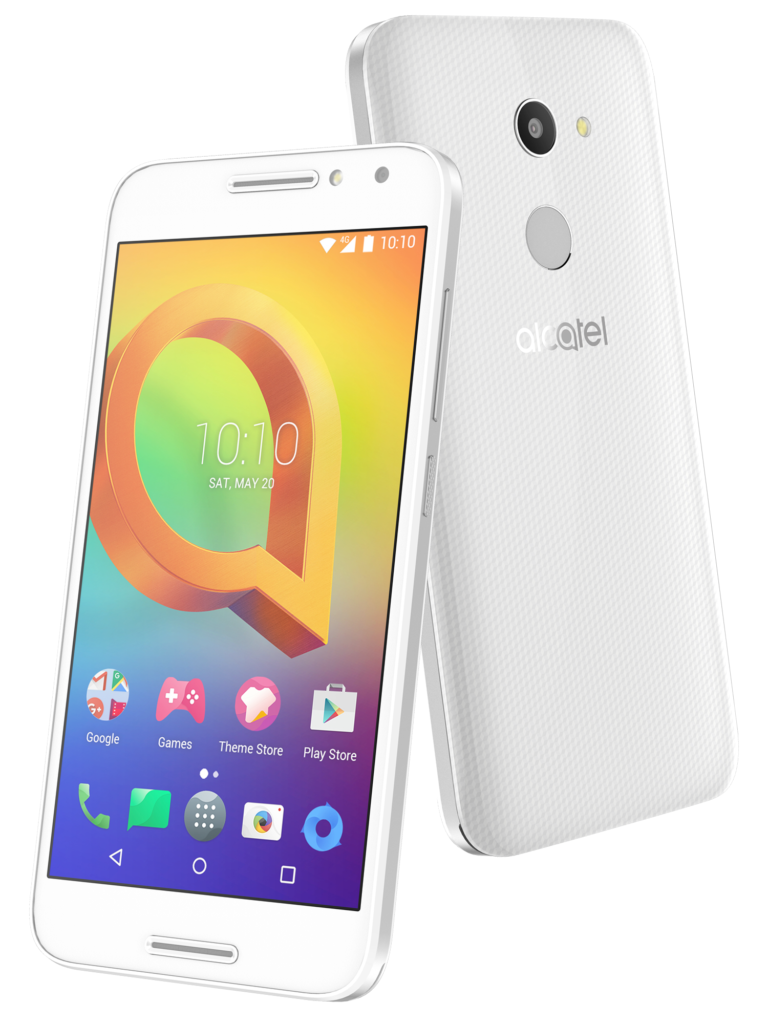
The Alcatel A3 is aimed at budget-minded users. The phone will be available in Europe from May onwards for 149 Euros.

alcatel a3Alcatel A3

The device is made of plastic but it has nice metal frame that goes all around the device.

The key specs include a 5.0" 720P display, a quad-core MediaTek MT6737 CPU, 1.5GB or RAM and 16GB of expandable storage. Also, the phone has a 13MP camera on the back along with the fingerprint scanner. Finally, the device has a 2460 mAh battery.

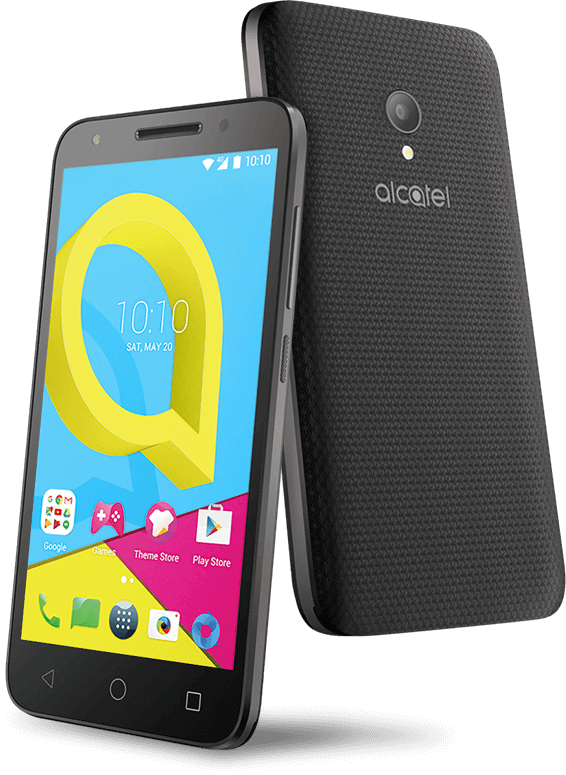
Another device that Alcatel released carries U5 model name. The Alcatel U5 will be available in Europe from May onwards for 99 Euros.

alcatel u5Alcatel u5

It is one of the cheapest phones the company has made and therefore, it has low-end specs like Mediatek MT6737M chip, 1GB of RAM and just 8GB of expandable storage.

Still, the phone has a textured back cover and it feels great in the hand. The user interface has preserved most of the stock Android looks and so far it seems nice and fast.

We will soon get the phones for the review, so stay to Gizmochina!

Always be the first to know. Follow us:
Source: Alcatel A5 LED Hands On: The world's first interactive LED-covered smartphone