Thursday, December 7, 2017

Xiaomi Redmi 5, Redmi 5 Plus with slim-bezel design, 18:9 display launched in China

Both the smartphones feature a taller 18:9 display with HD+ resolution. The Xiaomi Redmi 5 features a 5.7-inch display and is powered by a Snapdragon 450 Platform, whereas the Redmi 5 Plus comes with a 5.99-inch display and runs on a Snapdragon 625 SoC.

Xiaomi has launched its latest smartphones, the Redmi 5 and the Redmi 5 Plus in China. We already knew that the smartphones will sport an 18:9 display ratio with a bezel-less design. The company claims the new display provides a more immersive media and gaming experience. Other highlights of the smartphones include a metal unibody and a soft-toned selfie light. Both the smartphone will go on sale in China from December 12 but there is no word on an India launch yet.

The Xiaomi Redmi 5 has been launched in 2GB and 3GB RAM variants, while the bigger Redmi 5 Plus comes in 3GB and 4GB memory configurations. The Xiaomi Redmi 5 is priced at CNY 799 (Rs 7,800 approx) for the 2GB RAM/ 16GB ROM model whereas its 3GB RAM/ 32GB storage variant is priced at CNY 899 (Rs 8,800 approx). The 3GB RAM/ 32GB ROM variant of the Xiaomi Redmi 5 Plus will cost CNY 999 (Rs 9,700 approx), while its 4GB RAM/ 64GB ROM model's price is CNY 1,299 (Rs 12,700 approx). 

Both the Xiaomi Redmi 5 and Redmi 5 Plus are dual SIM smartphones and sport an 18:9 display with HD+ resolution of 720x1440p. The Redmi 5 features a 5.7-inch display and is powered by a Snapdragon 450 Platform whereas the Redmi 5 Plus comes with a 5.99-inch display and runs on a Snapdragon 625 SoC. 

In terms of camera, both the Redmi 5 and Redmi 5 Plus sport a 12MP main camera with a 1.25-micron pixel sensor and feature a 5MP front facing camera with a soft-toned selfie flash. The phones boast of improved portrait shots with the pre-loaded Beautify 3.0 app. The internal storage can also be expanded on both the smartphones via a microSD card. The Redmi 5 is backed by a 3300mAh battery, while the Redmi 5 Plus is powered by a 4000mAh battery. Both the smartphones run on MIUI 9 based on Android 7.1 Nougat. 

You can buy Redmi 5A from Flipkart at Rs 4999

Other Popular Deals
  • Xolo ERA 1X -4G with VoLTE...

  • Redmi 4 (Black, 32 GB)

  • Coolpad Note 5 (Royal Gold, 32...

  • Interesting Galleries Best camera phones under Rs....
  • Best smartphones to buy under Rs. 7,000 in India right now

    14 upcoming mobile phones you should expect in India in 2016

  • 10 smartphone sequels to look forward to in 2015

    10 best smartphones between Rs. 10,000 to Rs. 20,000...

  • Best smartphones under Rs. 15,000 with great battery backup

    26 upcoming & latest smartphones to check-out

  • Slimmest phones you can buy in India [November 2015]

    The best upgrade options for 10 classic smartphones

  • Huawei P8: First Look

    Xiaomi Mi4i vs Asus Zenfone 2 (2GB): Quick Comparison

  • LG G4: First Look

    Asus Zenfone 2 and Zenfone Selfie: In Pictures

  • Sony's current & upcoming Xperia phones: An Overview

    Micromax Canvas Sliver 5: First Look

  • Sony Xperia C4: First Look

    Coolpad Dazen X7 and Dazen 1: In pictures

  • ​
    Source: Xiaomi Redmi 5, Redmi 5 Plus with slim-bezel design, 18:9 display launched in China

    Wednesday, December 6, 2017

    Redmi 5, Redmi 5 Plus launching in China today, prices leaked ahead of launch

    The Xiaomi Redmi 5 and the Redmi 5 Plus are expected to be the company's first mid ranged smartphones to sport 18:9 displays. They will come with rear-mounted fingerprint scanner and a selfie flash.

    Xiaomi will be launching the Redmi 5 and the Redmi 5 Plus today in China. The launch event in Beijing will commence at 11:30 AM and will be live streamed on the company's site. Ahead of the launch event, AliExpress has listed the smartphones on its website thus revealing its price. 

    Xiaomi's Redmi 5 and the Redmi 5 Plus are the thin-bezel smartphones. According to the AliExpress listing, the former device will be priced at $199.99 (Rs 12,900 approx) for the 2GB RAM/16GB ROM variant whereas the Redmi 5 Plus is listed at $249.99 (Rs 16,120 approx) for the 3GB RAM/32GB storage model. Both the smartphones could be available in Blue, Gold, Black, and Pink colour options. 

    Previously, Xiaomi global spokesperson, Donovan Sung shared some official images of the smartphones which revealed the design of the smartphones. Both the smartphones are confirmed to sport reduced bezels and come with a taller 18:9 display. The images also reveal a rear mounted fingerprint sensor on both the smartphones and they will skip on hardware capacitive buttons on the front. The Redmi 5 was recently spotted on the TENAA website which reveaed some of the smartphone's hardware specifications. 

    As per the TENNA listing, The Redmi 5 is expected to be powered by a 1.8GHz octa-core Snapdragon 450 SoC. It will come with a rear-mounted fingerprint sensor and is tipped to sport a 3200mAh battery.  As per the listing, the device could launch in three configurations of 2GB RAM/16GB ROM, 3GB RAM/32GB ROM and 4GB RAM/64GB ROM. The smartphone is expected to support expandable internal storage of up to 128GB via a microSD card.

    The Redmi 5 Plus, on the other hand, is rumoured to be powered by a Snapdragon 625 chipset. It was earlier tipped to sport a dual camera setup with dual-LED flash, however, the official images reveal that it will come with a single rear camera setup. Finally, the Redmi 5 Plus is expected to be powered by a 4000mAh battery and could be launched with 3GB RAM and 32GB internal storage. 

    Digit NewsDeskDigit NewsDesk  news@digit.in

    The guy who answered the question 'What are you doing?' with 'Nothing'.

    Other Popular Deals
  • Moto C Plus (Starry Black, 16...

  • Coolpad Note 5 (Royal Gold, 32...

  • OnePlus 5 (Slate Gray 6GB RAM +...

  • Interesting Galleries Best camera phones under Rs....
  • Best smartphones to buy under Rs. 7,000 in India right now

    14 upcoming mobile phones you should expect in India in 2016

  • 10 smartphone sequels to look forward to in 2015

    10 best smartphones between Rs. 10,000 to Rs. 20,000...

  • Best smartphones under Rs. 15,000 with great battery backup

    26 upcoming & latest smartphones to check-out

  • Slimmest phones you can buy in India [November 2015]

    The best upgrade options for 10 classic smartphones

  • Huawei P8: First Look

    Xiaomi Mi4i vs Asus Zenfone 2 (2GB): Quick Comparison

  • LG G4: First Look

    Asus Zenfone 2 and Zenfone Selfie: In Pictures

  • Sony's current & upcoming Xperia phones: An Overview

    Micromax Canvas Sliver 5: First Look

  • Sony Xperia C4: First Look

    Coolpad Dazen X7 and Dazen 1: In pictures

  • ​
    Source: Redmi 5, Redmi 5 Plus launching in China today, prices leaked ahead of launch

    Tuesday, December 5, 2017

    Chinese smartphones enter Sri Lankan market with Vivo

    Leading Chinese smartphone Vivo officially entered the Sri Lankan market at a major launch event held in Colombo.

    The entry will see Chinese smartphones competing for a market share which is at present dominated by South Korean and Finnish brands.

    China's Vivo announced its official entry to the Sri Lankan market with the introduction of its 24 Megapixel Selfie-Shooter V7 to Sri Lanka.

    Vivo, the fast-growing global smartphone brand unveiled its newest member of the Vivo V-Series, the V7 in Colombo.

    Speaking at the launch, Mr. Song, the Vivo Director for the South Asian region noted that both Sri Lanka and China enjoy deep bilateral relations.

    Song said that his company will look to build the Chinese brand in Sri Lanka and give consumers a new experience in smartphones.

    Equipped with revolutionary technologies including the 24MP front camera and FullView Display, the V7  is the latest addition to Vivo's selfie-shooter series known for its exceptional photography features, screen quality and the overall product design.

    Having recently entered the value-conscious Sri Lankan smartphone market, Vivo continues its growth trajectory globally by adding value to consumer lifestyles through the most innovative next generation devices, offering outstanding, highly-differentiated audio visual experiences to customers.

    With its groundbreaking 24MP front camera, the V7 reinforces Vivo's leadership in selfies, producing striking pictures with true-to-life color and contrast that allow users to click the perfect selfie anytime, anywhere.

    The V7 is loaded with smart photography algorithms and additional features such as Face Beauty 7.0 to create exceptional quality, natural-looking selfies with brighter complexion, even in dimly lit environments. The V7's Portrait Mode adds background blurring for sharper contrast and visual appeal to generate stunning selfies that can compete with professional photography.

    The V7 comes with an 18:9 aspect ratio FullViewTM 5.7-inch display, offering 12.5% more visual display area compared to traditional 16:9 screens, making reading, browsing and navigating easier and more efficient. 83.6 % screen-to-body ratio also makes the V7 great for gaming with an inbuilt Gaming Mode that offers functions such as No Notifications and Floating Call Alerts for an uninterrupted gaming experience.

    The V7 is equipped with a 64-bit Qualcomm octa-core CPU and 4GB RAM, ensuring a smooth and seamless user experience. Its Funtouch 3.2 OS is also built with user-friendly features such as Smart Split 3.0, making the V7 highly compatible with today's demanding and fast lifestyle.

    In addition to the fingerprint, the V7 offers users the highest level of security with Vivo's Face Access technology, providing an easy and convenient way to unlock your phone.

    A thriving global smartphone brand focusing on introducing perfect sound quality and ultimate photography with cutting-edge technology, Vivo develops dynamic and stylish products for passionate young people. Vivo makes stylish smartphones with cutting-edge technology accessible to young people and professionals around the world.

    Vivo now has close to 200 million users to date and is one of the preferred brands of young people around the world. As the exclusive smartphone sponsor of the 2018 and 2022 FIFA World Cup, Vivo believes in the importance of encouraging young people to embrace self-expression and an energetic lifestyle.

    According to Counterpoint's latest research, Vivo was ranked as the fifth largest smartphone manufacturer globally in Q3 of 2017, with a market share of 7.1%. Vivo recorded the highest year-over-year growth of 32% in global smartphone shipments.

    Visit www.vivo.com/en for more information about the brand and new product launches.

    Pictures by Easwaran Rutnam


    Source: Chinese smartphones enter Sri Lankan market with Vivo

    Monday, December 4, 2017

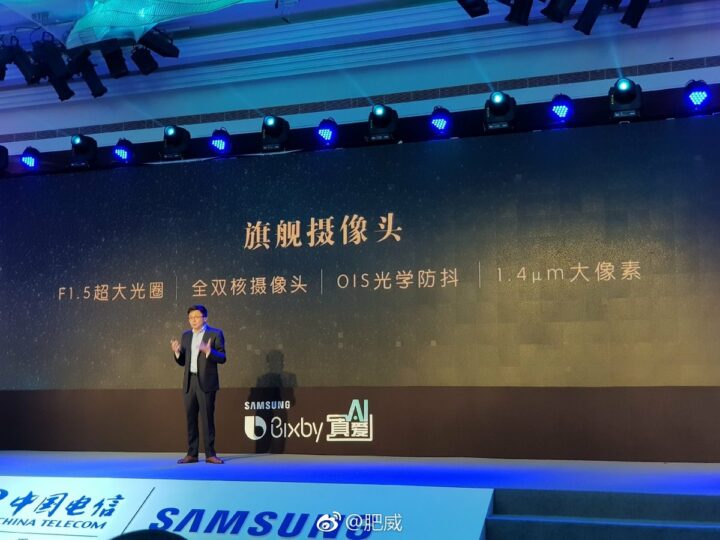
    Samsung W2018 launched in China with world’s first F1.5 aperture phone camera

    Samsung's latest flip phone, the W2018, has gone official at an event in China today. The W2018, like previous phones in the series, is a flagship offering in the flip phone form factory. It's kind of a mix between the Galaxy S8 and Galaxy Note 8, with the Snapdragon 835 SoC, 6GB of RAM, Android 7.1.1 Nougat, and a single 12-megapixel camera at the back.

    Samsung W2018 packs a world-first F1.5 aperture phone camera

    The rear camera, while a single sensor, is the world's first with an aperture of F1.5. That's lower than the F1.7 sensors Samsung has employed on its mainstream devices and would allow for improved photos in low-light conditions, in addition to a higher degree of bokeh (background blur) effect with a single camera. Samsung has apparently built in a software trick to intelligently vary aperture between F1.5 and F2.4, so the camera won't always be shooting at the widest aperture, or at least that's what seems to be the case here.

    Samsung W2018 launched in China with world's first F1.5 aperture phone camera

    The rest of the specs of the W2018 are the same as revealed by earlier leaks. There are two 4.2-inch Full HD displays, a 5-megapixel front-facing camera, a USB Type-C port, 64GB of internal storage, and a dedicated Bixby key. TENAA also lists 256GB in the storage section, so it's possible a higher-end variant could be made available. The phone's rather heavy at 247 grams, but that's because of the traditional numeric keypad and the circular navigation keys that make the W2018 what it is: A flagship phone based on a nearly archaic form factor that still has a few fans around the world.

    Of course, that doesn't mean Samsung will launch the W2018 outside China. It could be made available in South Korea, but that's pretty much it. Pricing for the W2018 is unknown right now, but we should get the official figure in the next few hours. Rumors say it could be as high as $2,000, which wouldn't be surprising considering the segment of the market it will target. In any case, we'll update this story as and when new information surfaces. Until then, take a look at this hands-on video of the phone to see how it looks in the flesh.

    Samsung W2018 launched in China with world's first F1.5 aperture phone camera

    Updated to fix wrong information that said a lower aperture value resulting in higher noise. 

    Source
    Source: Samsung W2018 launched in China with world's first F1.5 aperture phone camera

    Sunday, December 3, 2017

    Recent developments surrounding the South China Sea

    BEIJING (AP) — A look at recent developments in the South China Sea, where China is pitted against smaller neighbors in multiple disputes over islands, coral reefs and lagoons in waters crucial for global commerce and rich in fish and potential oil and gas reserves:

    ———

    EDITOR'S NOTE: This is a weekly look at the latest developments in the South China Sea, the location of several territorial conflicts that have raised tensions in the region.

    ———

    NEW CHINESE MILITARY TRANSPORT AIRCRAFT DECLARED SET FOR DEPLOYMENT

    Chinese state media say the country's new Shaanxi Yun-9 military transport aircraft has completed trial runs over the South China Sea and is ready to be deployed, expanding China's abilities in "safeguarding maritime rights" in the strategically crucial waterway.

    The Global Times newspaper said Sunday that the quadruple turbo prop plane "is now able to undertake combat missions" after conducting its first long-range training missions over the South China Sea. Word of the completion of trials was also announced by the Chinese People's Liberation Army Air Force on Saturday on its official WeChat microblog.

    Training included making air drops without assistance from ground controllers and preparing for emergency contingencies in all weather conditions, the Global Times said. That guarantees its ability to deliver supplies to China's island outposts in the sea, many of which have been equipped with radar stations, missile batteries, hardened aircraft shelters and other military infrastructure.

    The Yun-9 is a longer version of China's mainstay Yun-8 military transport aircraft, boasting advanced features, the ability to take off and land in a variety of environments, including small islands such as those created by China from coral reefs, and relatively inexpensive production costs.

    It can transport up to 20 tons of cargo, vehicles and about 100 troops, as well as serve in a medivac function with a maximum range of 4,200 kilometers (2,610 miles). The Global Times said that among its training missions, it flew from a military airport in the southwestern province of Sichuan, landed on an island in the South China Sea and returned to base the same day.

    ———

    AUSTRALIAN LAWMAKER RESIGNS AMID ACCUSATIONS OF CHINA BUYING INFLUENCE

    An Australian lawmaker who made controversial comments about respecting Chinese claims in the South China Sea resigned from his leadership roles in the opposition party over scandals involving a wealthy Chinese businessman and political donor that have raised accusations of China buying influence.

    Sen. Sam Dastyari was deputy whip in the center-left Labor Party and chairman of a parliamentary committee examining the future of journalism before resigning Thursday over his dealings with Chinese Communist Party-linked businessman Huang Xiangmo.

    Opposition leader Bill Shorten demanded Dastyari's resignation from his leadership roles late Wednesday after media broadcast audio of the senator misleading Chinese journalists last year on the Labor Party's policy on the South China Sea territorial disputes.

    Australia maintains that China should respect international law, and an arbitration ruling last year found China's broad claims to the sea were legally baseless. But Dastyari told Chinese reporters at a news conference in Sydney attended by Huang that Australia should observe "several thousand years of history" by respecting Chinese claims over most of the South China Sea. The phrasing echoes China's stance.

    Fairfax Media reported that Dastyari gave Huang counter-surveillance advice when they met at the businessman's Sydney mansion in October last year. Dastyari suggested the pair leave their phones inside the house and go outside to speak in case Australian intelligence services were listening, Fairfax reported.

    Dastyari has not denied the reports but said he had no knowledge about whether Huang was under Australian surveillance at the time.


    Source: Recent developments surrounding the South China Sea

    Saturday, December 2, 2017

    Samsung W2018 launched in China with world’s first F1.5 aperture phone camera

    Samsung's latest flip phone, the W2018, has gone official at an event in China today. The W2018, like previous phones in the series, is a flagship offering in the flip phone form factory. It's kind of a mix between the Galaxy S8 and Galaxy Note 8, with the Snapdragon 835 SoC, 6GB of RAM, Android 7.1.1 Nougat, and a single 12-megapixel camera at the back.

    Samsung W2018 packs a world-first F1.5 aperture phone camera

    The rear camera, while a single sensor, is the world's first with an aperture of F1.5. That's lower than the F1.7 sensors Samsung has employed on its mainstream devices and would allow for improved photos in low-light conditions, in addition to a higher degree of bokeh (background blur) effect with a single camera. Samsung has apparently built in a software trick to intelligently vary aperture between F1.5 and F2.4, so the camera won't always be shooting at the widest aperture, or at least that's what seems to be the case here.

    Samsung W2018 launched in China with world's first F1.5 aperture phone camera

    The rest of the specs of the W2018 are the same as revealed by earlier leaks. There are two 4.2-inch Full HD displays, a 5-megapixel front-facing camera, a USB Type-C port, 64GB of internal storage, and a dedicated Bixby key. TENAA also lists 256GB in the storage section, so it's possible a higher-end variant could be made available. The phone's rather heavy at 247 grams, but that's because of the traditional numeric keypad and the circular navigation keys that make the W2018 what it is: A flagship phone based on a nearly archaic form factor that still has a few fans around the world.

    Of course, that doesn't mean Samsung will launch the W2018 outside China. It could be made available in South Korea, but that's pretty much it. Pricing for the W2018 is unknown right now, but we should get the official figure in the next few hours. Rumors say it could be as high as $2,000, which wouldn't be surprising considering the segment of the market it will target. In any case, we'll update this story as and when new information surfaces. Until then, take a look at this hands-on video of the phone to see how it looks in the flesh.

    Samsung W2018 launched in China with world's first F1.5 aperture phone camera

    Updated to fix wrong information that said a lower aperture value resulting in higher noise. 

    Source
    Source: Samsung W2018 launched in China with world's first F1.5 aperture phone camera

    Friday, December 1, 2017

    China’s Next Potential Boom Spot: The Places People Overlook

    In the prefecture that contains Liangduo, Yancheng, locals' wallets are fattening more quickly than the national rate, and their household spending — which surged 8 percent per person in 2016 — outpaced the rises in Beijing and Shanghai.

    Signs of that new prosperity can be seen at Auto City, a jumble of ramshackle, boxy buildings in Yancheng where Toyota, Ford and just about every other major brand compete for customers. Zhou Zhengguo, owner of a dealership for the Chinese automaker Geely, expects to sell 2,000 cars this year, four times more than just two years ago.

    "Most people who bought cars were private businessmen," Mr. Zhou said. "Now working-class people buy, too."

    < p class="story-body-text story-content" data-para-count="110" data-total-count="2530">Those who live in China's less developed places could be crucial to the next stage of China's development.

    Robin Xing, an economist at Morgan Stanley, believes consumer spending in places like Yancheng's urban center will continue to outperform bigger cities. As a result, two-thirds of all additional private consumption growth will come from these less developed areas through 2030.

    "We do expect them to catch up, to narrow the income gap with the large cities," Mr. Xing said.

    Businesses are looking at such areas in a new light. New highways and high-speed railways make relocating factories and other operations into smaller c ities easier, allowing companies to take advantage of their lower costs. Industrial output in Yancheng expanded more quickly than the national rate last year.

    The gains are not limited to the hinterland's main towns. Farms are becoming bigger, more efficient and more lucrative.

    Photo Luo Jianhai, a farmer in Xinling village in eastern China, has bolstered his income by expanding his farm. Credit Yuyang Liu for The New York Times Photo Mr. Luo's farm in Xinling. He is typical of a new breed of farmer-entrepreneur in China that is helping to transform the countryside. Credit Yuyang Liu for The New York Times

    In Xinling, a nearby village, Luo Jianhai, 37, is typical of a new breed of farmer-entrepreneur. He has steadily expanded the farm where he tills rice and wheat by renting land from his neighbors. He also invested in two new tractors, which he lends out to other farmers who need them to work their own larger plots. Over the past three years his annual income has increased seven times, to $100,000, and his spending has quadrupled, mainly on higher-quality clothing for his three children and a new, $17,000 car from a General Motors joint venture.

    His improved lifestyle, Mr. Luo said, "is the difference between being poor and having money."

    Nearby, Cheng Zhiguo, 47, also enlarged his farm this year, increasing his net income to about $23,000 — five times greater than just three years ago. His reward: his first car, a Hyundai, bought in August.

    Such change is luring urban entrepreneurs such as Zhou Jian. Mr. Zhou, a 33-year-old resident of Nanjing, a major city in eastern China, figured that large-scale farming would also need more money. In 2013, he founded Nongfenqi E-Commerce Company, which helps arrange loans for farming families from banks and other lenders.

    Nongfenqi has since arranged about $150 million in loans, opened more than 100 offices spread around rural China and hired 800 employees. "The upgrading of the market allows businesses like us to serve these big farmers," Mr. Zhou said.

    Such opportunity has attracted JD.com. Over the past three years, JD.com has more than doubled its army of deliverymen, many aimed at reaching into rural towns and villages.

    Continue reading the main story
    Source: China's Next Potential Boom Spot: The Places People Overlook