Sunday, August 7, 2016

Xiaomi Unveils Mi VR Play Virtual-Reality Headset in China

Made of Lycra and featuring a zipper to insert a smartphone, the Mi VR Play looks like a refined, updated version of Google Cardboard.

Xiaomi has released its first virtual-reality viewer, the Mi VR Play, and an accompanying Mi VR app, for initial distribution in its native China as beta releases to explore the technology.The company announced the Mi VR Play beta release on Aug. 4 through a post on Facebook, describing it as "a lightweight VR headset that sends you into an alternate reality with immersive 2D, 3D and panoramic videos."The device, which must be used with a smartphone to operate, features a zippered front flap where users can insert a compatible 4.7-inch to 5.7-inch smartphone. The device has a body made of Lycra and uses anti-slip rubber straps around a user's head to hold it in place, according to the company. Inside the VR Play, an anti-reflective, optical-grade aspheric lens is used to provide visual clarity for users. The devices are available in a range of stylish designs and colors.Users in China who want to beta-test the new device can do so by buying one for about 15 cents, according to Xiaomi . No additional details or pricing were released, including whether the Mi VR Play devices will reach American shores or other countries in the future. The concept for the Xiaomi device is similar to Google Cardboard devices, which were dreamed up in 2014 by two Google employees as a simple VR viewer made up of cut-and-folded cardboard that is shaped into a boxy-looking VR device. The gadget has a slot that accepts a compatible Android smartphone so that it can take advantage of the phone's display and other features. Several other parts are featured besides the cardboard, including some Velcro, a rubber band, two small magnets and some aftermarket lenses.In February, Google added a virtual-reality product page to its online Google Store and began offering Google Cardboard and other VR devices for sale to consumers from one easy-to-use source, according to an earlier eWEEK story.Google has been working on various VR projects over the last several years. Also in February, reports circulated that Google is in the midst of designing a stand-alone virtual-reality headset device that would not have to be used with a smartphone, unlike its existing Google Cardboard viewer. The latest device would feature its own screen, high-powered processors and outward-facing cameras, according to an earlier eWEEK story.A wide range of virtual-reality products are being developed and marketed as the technology continues to mature. In June, HTC moved its popular Vive virtual-reality product line into its own company-owned subsidiary as the main company continues to react to its tough financial performance in the first quarter of the year. The new subsidiary aims to support and promote the company's VR ecosystem, while isolating it from the parent company's financial woes.A new report issued by research firm TrendForce concludes that Sony's upcoming PlayStation VR headset, which won't be released until October, is already priming the global virtual-reality marketplace, according to a recent eWEEK story. Big preorder numbers for the PlayStation VR point to the device making up some 67 percent of the expected 9 million VR devi ces that will be sold in 2016, the research concluded. Sales of the PlayStation VR headset are expected to "overwhelm its competitors this year, taking 67 percent of the global VR device market with about 6 million units shipped," while competitor Oculus will ship about 2.3 million units of Rift and HTC will ship only about 700,000 units of its Vive headsets, according to the report. The report also projects sales of some 50 million VR devices globally by 2020, for a compound annual growth rate of 53.5 percent.TrendForce also estimates that total sales in the VR market globally will be more than $70 billion in 2020, with software making up about 60 percent of that total.Sony's upcoming $399 PlayStation VR headset was announced in March for an October launch and is aimed at bringing virtual-reality game play to its popular PlayStation entertainment systems.In March, Oculus began shipping preordered units of its $599 Oculus Rift virtual-reality headsets to customers, while the $99 S amsung Gear VR headset went on sale last fall, giving users the chance to view video games, movies and more in immersive, new ways. The Samsung Gear VR is a consumer version of virtual-reality headsets made by Oculus.An April report by research firm Strategy Analytics estimated that the global virtual-reality headset market would bring in about $895 million in revenue in 2016, with about 77 percent of that revenue coming from premium-priced products from Oculus, HTC and Sony. Interestingly, the report concluded that the actual per-device sales totals would be dominated by lower-priced headsets from myriad vendors.The report looked at the VR headset market and predicted that three of the latest devices, the Oculus Rift, the HTC Vive and the coming Sony PlayStation VR, would bring in the bulk of the segment's revenue this year. At the same time, though, those higher-priced devices will only make up about 13 percent of the 12.8 million VR headsets that Strategy Analytics predicts wil l be sold in 2016, the report stated. 
Source: Xiaomi Unveils Mi VR Play Virtual-Reality Headset in China

Saturday, August 6, 2016

Lenovo K5 Note, Redmi 3S and other smartphones launched this week in India

This week, many affordable devices with superb specs were launched in the country.

It was a superb week for the smartphone lovers in India. The week got to a superb start with Lenovo launching its much anticipated Vibe K5 Note. Later in the week, we saw some most anticipated devices including Xiaomi Redmi 3S and Oppo F1s. LYF, Lava and other companies too announced their new smartphones. Check out names of all devices that were launched in India this week and their specs.

Lenovo Vibe K5 Note

The K5 Note will be exclusively available from Flipkart from August 3 through open sale.

In India, the Lenovo K5 Note has been launched in 3 GB and 4 GB RAM models; both the versions come with 64 bit octa core Mediatek 6755 processor. In China, the K5 Note was launched in 2 GB and 3 GB RAM models with Mediatek Helio P10 processor. The 3 GB model is priced at Rs 11,999 while the 4 GB version will cost Rs 13,499.

With the device, Lenovo is offering an AntVR headset worth Rs 1,299, TheaterMax controller worth Rs 999, Skullcandy headphone worth Rs 1,299 and Amkette gamepad Pro 2 controller worth Rs 2,000. However, these accessories will be offered only for two days - August 3 and August 4 - as part of launch offer. You can also avail Flipkart's exchange offer while buying Lenovo K5 Note.

The Lenovo K5 Note has a metal body and it comes with a fingerprint sensor. The phone has a 5.5-inch Full HD (1920 x 1080 pixel) IPS display. The K5 Note offers 32 GB of internal memory and has a 128 GB micro SD card slot and has USB OTG functionality as well. The Android 6.0 Marshmallow operating system based K5 Note has Vibe user interface and a 3,500 mAh non-removable battery with fast charging support.

The Lenovo K5 Note has 4G connectivity, Bluetooth 4.1 and dual band WiFi. The smartphone flaunts a 13-megapixel rear camera with LED flash and an 8-megapixel shooter at the back. Besides, it has dual SIM.

Oppo F1s

The smartphone is priced at Rs 17,990 and will be available exclusively via Amazon India. The F1s will be available for pre-order in India between August 4 to August 10. The smartphone comes in Gold and Grey color options.

The USP of this smartphone is its 16-megapixel selfie camera which comes with 5P lens, and f/2.0 aperture, On the back it flaunts 13-megapixel shooter with LED Flash, PDAF, and f/2.2 aperture.

The Oppo F1s features a 5.5-inch HD (720p) IPS display with Corning Gorilla Glass 4 protection. It is fueled by a 1.5GHz octa-core MediaTek (MT6750) processor, along with with Mali T860 GPU. It comes with 3GB of RAM, 32GB of internal storage, and 128GB expandable storage slot. The smartphone get is strength from a 3075 mAh battery.

Besides, the phone runs on Android 5.1 Lollipop which is wrapped under with ColorOS 3.0 user interface. Other than that the Oppo F1s offers 4G LTE connectivity with VoLTE support, WiFi (802.11 a/b/g/n), GPS, Bluetooth 4.0, and a microUSB port. The handset measures 154.5 x 76 x 7.38 mm and weighs 160 grams.

Xiaomi Redmi 3S, Redmi 3S Prime

Redmi 3S is priced at Rs 6,999, while Redmi 3S Prime will retail at Rs 8,999. Both models will be initially available exclusively on Mi.com and Flipkart, starting with Redmi 3S Prime on 9th August.

Crafted with a premium metal body, Redmi 3S has a 5-inch HD display. Though it weighs just 144 grams, Redmi 3S comes with a huge 4100 mAh battery which claims to offer two days of battery back up with moderate usage. Redmi 3S is powered by the octa-core Qualcomm Snapdragon 430 processor, 2 GB RAM and Adreno 505 GPU.

Redmi 3S has a 13MP rear camera with PDAF (phase detection autofocus) for faster focusing, and supports 1080P video recording. It also features HDR and HHT (handheld twilight) modes for various shooting conditions. Redmi 3S supports expandable memory up to 128GB micro SD cards. It supports 4G LTE and VoLTE out of the box, covering all India LTE bands - Bands 3, 5 and 40. The Redmi 3S has 16 GB of internal memory and an IR blaster.

In addition to all the features of Redmi 3S, Redmi 3S Prime comes with a fingerprint sensor with ultra-fast phone unlocking and enhanced security and privacy, as well as 3GB RAM and 32GB storage.

Intex Aqua Strong 5.1

The Intex Aqua Strong 5.1 has been listed on company's official website for Rs 5,599. Available in Blue, White and Champagne colours, the Intex Aqua Strong 5.1 comes with a 5-inch FWVGA (854 x 480 pixels) display with Corning Gorilla Glass 2 protection. A 1.0 GHz quad-core MediaTek (MT6735) processor, ARM Mali-T720 MP1 GPU and 1GB RAM runs this Android 6.0 Marshmallow operating system based phone.

For storage, it has 8GB of internal storage and if you need more memory, you can use its expandable storage slot that can hold up-to a 32GB micro SD card. The Aqua Strong 5.1 has a 2800 mAh Li-Ion battery, which claims to offer up-to 16 hours of talk-time and 466 hours of standby time on 4G network.

The smartphone has a 5-megapixel rear camera and a 2-megapixel front camera for selfies and video calling. The rear camera comes with dual LED flash, while the front camera comes with single LED flash light. The camera features include Smile detection, face beauty, panorama mode, and voice capture.

Further, the Aqua Strong 5.1 offers Dual SIM, 4G, Bluetooth 4.0, Wi-Fi 802.11 b/g/n, Micro USB port, GPS/AGPS, Emergency rescue, turbo download, and Accelerometer. The smartphone also comes with various pre-loaded apps such as Matrabhasha, Online Software Update, Clean Master, Opera Mini, Opera Max, and Saavn. The handset measures 141.2 x 72.3 x 9.47 mm and weighs around 150 grams.


Source: Lenovo K5 Note, Redmi 3S and other smartphones launched this week in India

China is flooding Silicon Valley with cash. Here’s what can go wrong.

SAN FRANCISCO — Mountain View, Calif., start-up Quixey was the envy of many in Silicon Valley when the company announced a multimillion-dollar investment from one of China's largest and most powerful technology companies, Alibaba.

The $110 million deal — parceled out over two funding rounds in 2013 and 2015 — was the latest evidence that deep-pocketed Chinese investors would pay premium prices to get a stake in the region's hottest young companies.

But then, something went very wrong: Alibaba stopped paying, according to people familiar with the matter. The start-up was left in the lurch, until Alibaba fired back with a hard bargain: We'll give you a loan and you must promise not to sue. After a few breathless months of negotiations, Quixey went through with the new deal. The company said Thursday it had borrowed $30 million. Those funds came from Alibaba and others under terms that were worse than the original arrangement, the people said.

At the heart of the bitter, under-the-radar dispute between China's online shopping powerhouse and Quixey, whose tech enables users to search within apps, is a culture clash — one that is emblematic of both the promises and the perils involved in Silicon ­Valley's relationship with China. Experts say that relationship — ­always delicate, always mind-bogglingly complex — has reached a new inflection point, as unprecedented amounts of cash from China have poured into Silicon Valley.

The flood has had a profound effect on the region's start-up boom. Over the past two years, Internet giants such as Alibaba, Baidu and Tencent — sometimes referred to as the Amazon, Google and Facebook of China — as well as dozens of private investors, family offices, local municipalities and state-owned enterprises have raced to capture a stake in the region's cutting-edge technologies.

Investment from China into Silicon Valley, excluding real estate, topped $6 billion by the end of the first half of 2016, with more than half of that spending taking place in the past 18 months, according to the Rhodium Group research firm. Investors have been spurred by China's growing wealth over the past decade and a government push to develop innovative technologies — particularly in areas such as virtual reality and artificial intelligence, where China still lags.

"China realizes it needs a role model to follow as the country is transitioning from manufacturing to innovation," said Shoucheng Zhang, a celebrated Stanford physicist who started a $350 million venture capital firm two years ago to capitalize on the boom. "This is the new digital Silk Road."

U.S. start-ups, for their part, are hungrier than ever for access to China's cash-rich companies and newly minted millionaires, especially in light of a tighter fundraising environment in Silicon Valley. Chinese investors also can open doors to China's billion-plus consumers for services and products that are facing a saturated market in the United States.

Such investments can alter the trajectory of a nascent company. "Start-up fundraising in Silicon Valley wouldn't function without Chinese money," said Chris Nicholson, chief executive of two-year-old artificial intelligence company Skymind.io, which has received funding from Tencent and other Chinese investors. Start-ups that have been rejected from the ­clubby venture capital world on Sand Hill Road can still get cash from China, he said. "It has changed the landscape."

But there is also distrust on both sides. U.S. start-ups are wary of hardball tactics and the power that some Chinese players have come to exert. Some have raised concerns about their innovations being copied, which has been a long-standing concern for many U.S. corporations partnering with Chinese firms. As newcomers, Chinese investors don't want to be disrespected or treated as naive, or as so-called dumb money, according to executives who work closely with them.

In interviews, U.S. entrepreneurs said that Chinese investors often play by unfamiliar rules. Quixey learned that the hard way.

Shortly after the company got its first round of financing from Alibaba in 2013, Quixey began doing custom work for the Chinese conglomerate under a separate contract, building specialized technology that would enable Chinese consumers to search inside Chinese apps in Alibaba's operating system, YunOS. (Searching within apps is very different, technologically speaking, from searching on the Web; even Google has failed to crack the problem.) The deal stipulated that Alibaba and Quixey would share revenue from any profits Alibaba made off using the company's technology in China, according to people familiar with the matter who spoke on the condition of anonymity to talk freely about private events.

By early this year, a dispute had arisen. Alibaba claimed that the start-up had fallen behind on its deliverables; Quixey claimed that Alibaba owed the company tens of millions of dollars for work rendered for several months, the people said.

Meanwhile, the expected revenue from Alibaba's distribution in China never came, according to one of the people. Alibaba became frustrated that Quixey wasn't diversifying its revenue streams, another person said. At the same time, Alibaba went through a large organizational shake-up, and start-ups that attempted to work with the company, including Quixey, felt they were getting bounced around by a dizzying array of politics and priorities, several people close to the matter said. The problem was compounded by language barriers, they added.

Quixey considered suing Alibaba, but decided it wouldn't be worth it, the people said. Few start-ups can afford a costly lawsuit against their main customer and investor. The tumult led to missed revenue targets and the departure of key executives, while the company's founder stepped down as chief executive.

"We do, of course, value our relationship with Alibaba — they've been an integral partner and investor," said Quixey spokesman Scott Samson. He declined to comment further.

Alibaba declined to comment, citing a policy of not discussing current investments.

Quixey aside, many investors said the Silicon Valley-China relationship, while full of opportunity, is also rife with cultural misunderstandings. Many partnerships fall through as a result, said Jay Eum, managing director at TransLink Capital, a Palo Alto, Calif.-based early stage venture capital firm that specializes in helping start-ups work with Asian technology conglomerates. (Eum's firm is an investor in Quixey, but he said he was speaking generally.)

"While the promise of a China partnership is exciting and looks good on paper, the actual reality requires trade-offs," Eum said.

In China, where there's less rule of law, a powerful government relentlessly pushing for growth, and enormous competition among companies, brass-knuckled business tactics are more common, said Thilo Hanemann, an economist at the Rhodium Group.

"Sometimes these tactics are not misunderstandings but reflections of cultural norms of how business is conducted in China. The Chinese investor may ask for terms that would be considered overly aggressive in Silicon Valley, but these terms would be considered fair in China," said Connie Chan, a partner with the venture capital firm Andreessen Horowitz who focuses on China.

It's not uncommon, for example, for an investor to take ideas from one start-up and then turn around and invest in a rival, experts said.

Nicholson, the Skymind.io chief executive, said many U.S. start-ups cannot afford to walk away from a bad deal. "As a founder, your job is to keep your baby alive, so you can't always afford to ask too many questions when someone comes along with terms that might not be perfect," he said, while emphasizing that his own experiences with Chinese investors had been extremely positive.

Overall, entrepreneurs and investors said Chinese investment had opened many new doors. For CloudFlare, a Web performance and security start-up that had pulled out of China in 2011, an unusual partnership with Baidu in 2015 put the company's technology in the hands of millions of Chinese consumers. For Artsy, an online art marketplace, investors from China helped the company grow its market in Hong Kong. Magic Leap, a virtual reality darling that received a large investment from Alibaba this year, was invited by Alibaba to give a keynote presentation in front of hundreds of Chinese engineers at the conglomerate's Maker's Fair in Shanghai.

Chinese investment in Silicon Valley stretches back at least three decades. But 2014 is considered a tipping point. That year, deals began to rev up in a big way: Chinese investors took part in 101 deals — more than triple from two years earlier, according to the research firm CBInsights. The actual number is likely to be larger since many investments aren't made public.

Like the U.S. real estate industry and the bond market, Silicon Valley has been the target of growing classes of Chinese uber-rich who are looking for opportunities to grow their wealth outside the country. Recent instability has pushed money out of the country even more quickly, according to Rhodium.

Alibaba's spending spree has included $795.5 million in Magic Leap, $500 million in the ­e-commerce site Jet.com, along with unspecified multimillion-dollar investments in Snapchat, ride-hailing service Lyft and ­e-commerce start-up Shoprunner. Last year, Baidu led a $1.2 billion fundraising round in Uber and put the finishing touches on a glossy new Silicon Valley campus — a move intended to anchor the company's growing number of investments in the region and attract engineering talent that is still hard to come by in China. Tencent, which owns WeChat, the most popular messaging application in China, has a quieter presence, investing small amounts in hundreds of companies and vetting technologies in the areas of gaming, mobile money and artificial intelligence.

"We're looking at companies that provide strategic value to us — and building cool new technology for the China market," said Alex Tze-Pin Cheng, general manager of Baidu U.S. Like other Chinese investors, Baidu has developed ties to the influential venture capitalists on nearby Sand Hill Road, Cheng said.

Fyusion founder Radu Rusu, whose recent deal will put his company's 3-D photography technology on millions of Huawei smartphones, said the arrangement would be transformative for his 40-person start-up. Like other founders who had Chinese investors, he said it was remarkable how quickly a deal went down. "Definitely much faster than any U.S. company I've dealt with," Rusu said. "They were very aggressive — like there's no time to waste."

In the near term, Quixey and Alibaba are patching up their disagreements. The start-up has built new technology to search within apps and is talking to a fresh set of potential customers and partners, people familiar with the matter said.

Quixey is no longer building technology for Alibaba.


Source: China is flooding Silicon Valley with cash. Here's what can go wrong.

Friday, August 5, 2016

Italian RAT targets Android devices in China by IMEI codes

Gov't retains dozens, not thousands, of zero-days

The number of vulnerabilities in the federal government arsenal hovers in the dozens, Columbia University Senior Research Scholar Jason Healey told a DEF CON 24 audience.

Bot Mayhem takes first place in DARPA Cyber Challenge

Team ForAllSecure won the DARPA Cyber Grand Challenge defeating six other finalists and taking home a $2 million award for its bot Mayhem, which is the first fully automated cybersecurity ...

Google launches API to eliminate passwords on Android devices

Google rolls out an API that will allow Android apps to access login credentials, essentially eliminating the need for passwords.


Source: Italian RAT targets Android devices in China by IMEI codes

China’s Xiaomi Unveils Its Answer to VR for the Masses

Users will be able to customize an inexpensive mobile headset with cloth covers.

Chinese mobile giant Xiaomi has revealed its first virtual-reality headset, and like the rest of the company's products, it's built to appeal to a wide audience.

The Mi VR Play uses 4.7- to 5.7-inch smartphones as its screen and computer, which keeps manufacturing costs down and allows it to also be used as a mobile device. It's not clear yet how users can interact with the headset once it is on their head, prompting IDC gaming analyst Lewis Ward to put it in the same category as the $15 Google Cardboard. It could also be compared to headsets such as Samsung's $99 Gear VR or the countless knockoffs that can be had for less than $20. Mobile VR headsets are little more than a strap, lenses, and a frame.

For much of the world, the first exposure to virtual reality is likely to come from an inexpensive mobile headset. High-quality VR systems such as the Oculus Rift and HTC Vive have much better screens and can run more intensive software, but they must be plugged into a gaming computer at all times. For those who aren't ready to invest in a headset that costs upward of $500 and a powerful PC, a mobile headset represents an alternative.

But it's too early to tell if the simple VR headsets will have a long shelf life. "The user interface is so simplistic that my concern about this is: is it going to be functional for a wide enough variety of applications and experiences to be a long-term phenomenon?" says Ward.

The Mi VR Play has a soft cover that zips closed to hold a phone in place.
Xiaomi is known in China for its inexpensive electronics, including smartphones and laptops that often bear a strong resemblance to Apple products. It held 15.2 percent of the Chinese smartphone market in 2015—the highest in the country.

Xiaomi will attempt to set itself apart from its competitors with an app store. The Mi VR app currently contains content from Condé Nast Traveler, Chinese video website YouKu, and Korean VR company Dooribun, with more experiences planned. The design of the app store looks promising, but content is what will drive adoption. Xiaomi's phones and other Android devices are expected to be compatible with Google's upcoming Daydream, a combination of software, sensors, and displays that will make phones specially equipped for VR.

Given that the Play is meant to be a mass-market device, it also makes sense that Xiaomi is integrating some customization options. The headset has a soft Lycra cover that zips closed to hold a phone in place. Pictures depict the cover in red floral, camo, and even denim patterns that are much friendlier-looking than its rivals' black-and-white plastic bodies. They are loud but welcome designs that move VR away from sci-fi technology and make it seem more like a lifestyle product.

Xiaomi has not yet said what the Mi VR Play will cost but will soon launch the headset among beta testers who signed up earlier this week. The first testers will pay just 15 cents for the device.

Xiaomi's U.S. store offers basic accessories like headphones and power banks, but it wasn't until this spring that it announced the U.S. sale of an actual device: a set-top box revealed at Google I/O.

It isn't clear when Xiaomi will expand its U.S. offerings. In June, the company purchased 1,500 patents from Microsoft in exchange for agreeing to ship devices with Microsoft apps installed. Those patents could help pave the way for a U.S. Xiaomi VR and phone launch.

Given how many cheap alternatives to Play are available in the U.S., Xiaomi would face some stiff competition stateside. U.S. companies are more likely to worry about competing with it in China, where Xiaomi is such a dominant name. But it's more about exposure this early in the VR industry, anyway. More inexpensive headsets means more people noticing VR for the first time.

Ward expects the industry to quickly move past simple headsets, with Daydream being the indication that even Google is done with Cardboard-like devices.

"My question is, are Xiaomi and others willing to move in that direction quickly also?" Ward says. "This is a stop-gap product that is not where these companies will be a couple years from now."


Source: China's Xiaomi Unveils Its Answer to VR for the Masses

Thursday, August 4, 2016

Chinese Android smartphone firm: It packs a dedicated crypto chip

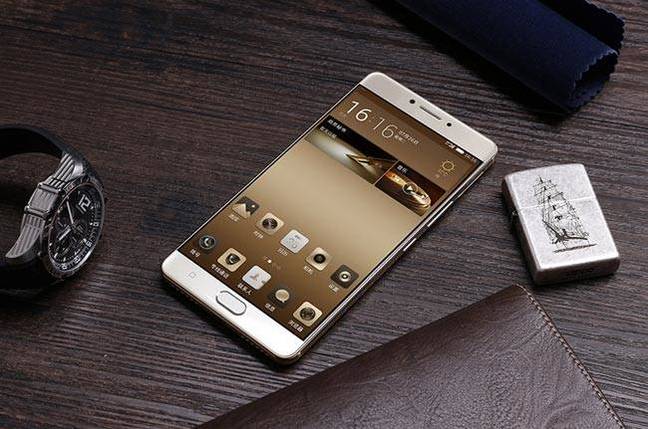
Chinese smartphone manufacturer Gionee has released a device with a dedicated encryption chip it calls "equivalent to a black box" that offers the "most advanced" mobile data protection to date.

Experts we asked were sceptical about the claims, which at minimum show that improved security is becoming a differentiator in the increasingly competitive higher-end Android smartphone marketplace.

The firm says the encryption chip that comes with the Gionee M6/M6 Plus provides on-chip data encryption. "With this encryption chip, users get a dual protection of their data, as it not only can't be seen if the user chooses to hide it, but even if the Android system gets hacked, the data can be accessed but not seen, as everything is encrypted," Gionee explains.

The smartphone also features technology designed to securely protects contacts, messages, call records, images, documents, and applications, dubbed Private Vault 2.0.

Mobile security experts quizzed by El Reg said the claims needed clarifying. "Most phones have had hardware encryption for years, they prob[ably] mean hardware key store," one expert told us. "Encryption not equal to security, [it] depends how you use it."

Security is increasingly becoming a key differentiator for upper middle to high-end smartphone sellers. BlackBerry said its new Android Smartphone, the DTEK 50, Is the "world's most secure". The principals behind both Sirin Labs' high end Solarin and the Blackphone, from Silent Circle and Spanish firm Geeksphone, would doubtless contest the honour should push come to shove.

All three alternatives feature software and modified operating systems to protect users from malware and other hacker risks that bedevil vanilla Android smartphones.

Power play

Aside from improved security, Gionee says its M6 sports increased battery life (M6 Plus: 6020mAh; M6: 5000mAh). This means that the M6 offers up to 55hrs of continuous call time, 16.4hrs of video play time, and 794hrs of standby time. The smartphone features quick charging technology that minimises the possibility of overheating as well as the ability to use the M6/M6 Plus to charge other electronic devices.

The Gionee M6 has a 5.5-inch,1,920x1,080 resolution display and runs with a Helio P10 MT6755m 64-bit and 1.8GHz octa-core processor with 4GB RAM. The smartphone runs Amigo 3.5 (based on the Android 6.0 Marshmallow variant). It is outfitted with a 13MP rear shooter and 8MP front shooter (with single flashflight).

The Gionee M6 Plus has a 2.0GHz octa-core processor, bigger 6-inch display and a better 16MP rear camera but is otherwise similar. The Gionee M6 is priced from $404 while the Gionee M6 Plus retails for $449.

Quizzed by El Reg, a Gionee spokesman offered no extra information about the encryption chip beyond what was contained in a media kit, which claims the feature is "equivalent to a black box". He expressed no concern that the recently revealed sales troubles of the Blackphone might suggest that customers are not ready to pay extra for security.

"Gionee [sales] won't [be a] worry," he said. "as the M series is targeted at 'People who work in the government and people who do business'. It's already a huge success for its huge battery life. The additional encryption chip just adds more security [to] the value. Besides M6 [doesn't] even raise the price from the M5. So it should more successful than the M5."

The M6 (source: Gionee)

Gionee Communication Equipment Co. Ltd was founded on September 2002. It ranks itself as one of the world's top 10 mobile manufacturers. ®

Sponsored: Accelerated Computing and the Democratization of Supercomputing


Source: Chinese Android smartphone firm: It packs a dedicated crypto chip

ZTE wants the public's ideas for its next smartphone

ZTE mobile phonesImage copyright Getty Images Image caption ZTE is China's second-largest telecommunications company, behind Huawei

Electronics giant ZTE wants the public to help design one of its next mobile phones.

The company has launched a website where people can submit their ideas and vote on those of others.

Initial proposals have included a solar-panel case, a second screen that can rotate 360 degrees, and a modular design to connect with keyboards and games controllers.

ZTE has promised to release the "crowd-sourced" phone in 2017.

Known as Project CSX, the initiative was first announced in January at the Consumer Electronics Show in Las Vegas.

Submissions officially opened on 3 August, and ZTE's community website now features a growing list of ideas proposed by the public.

One user believes the phone should include a "desktop mode" that turns it into a rudimentary PC, while another says ZTE should build a phone dedicated entirely to Pokemon Go.

But the smartphone manufacturer has laid some ground rules to curb imp ractical ideas.

"Of course, there are always rules and restrictions to any competition. The most important thing is that the product that we end up building follows ZTE's mission," said Jeff Yee, vice-president of technology planning at ZTE.

"It must be a mobile product, technically possible by 2017 and be affordable to the general public."

The initiative was a "bold approach for the industry that demonstrates how ZTE keeps consumers at the heart of everything", said Lixin Cheng, chief executive of ZTE USA.

But one smartphone expert believes the crowd-sourcing project comes with caveats.

"I'm sceptical that Project CSX will create something the world has never seen before," said Nick Wood, assistant editor of Total Telecom.

"One reason being, the final device has to be affordable, which probably rules out expensive upcoming features that requir e new manufacturing techniques like flexible screens."

Mr Wood said there was a pronounced homogeneity to smartphone designs, with many of the most popular phones adopting the same slate shape with similar camera and storage specs.

"Genuine, eye-catching innovation in smartphone hardware is the exception rather than the rule," he said.

ZTE is China's second-largest telecommunications company, after Huawei.

Based in Shenzhen, the corporation is known for its smartphones, but it also makes semiconductors and other products.


Source: ZTE wants the public's ideas for its next smartphone