Saturday, November 4, 2017

India Gives China a Tough Competition in the Smartphone Market

You're reading Entrepreneur India, an international franchise of Entrepreneur Media.

Every month mobile companies launch a new model with competing features.  Factors like low smartphone penetration and increase in LTE availability have led to the growth of smartphone shipments in India. This also means that it is the best time for vendors to survive in the extremely competitive market like India.

According to a report by Canalys, India has left behind U.S. to become second largest smartphone market. The findings revealed that India has now overtaken the United States to become the world's second-largest smartphone market after China. 

Entrepreneur India takes a look at some other key highlights of the report:

  • Sales Top 40 million units for First Time: After a wobble in Q2 2017, India's smartphone market recovered quickly, with shipments growing 23% year over year in Q3 2017 to reach just over 40 million units. Samsung and Xiaomi, which shipped 9.4 million and 9.2 million units respectively, accounted for almost half of the total market as the top five vendors continued to post strong growth in Q3 2017.
  • A Major Relief to Smartphone Industry: "This growth comes as a relief to the smartphone industry. Doubts about India's market potential are clearly dispelled by this result," said Canalys Research Analyst Ishan Dutt.

  • Low Smartphone Penetration and the Explosion of LTE are the Main Drivers:"There are close to 100 mobile device brands sold in India, with more vendors arriving every quarter. In addition, India has one of the most complex channel landscapes, but with low barriers to entry. Growth will continue. Low smartphone penetration and the explosion of LTE are the main drivers."

  • Samsung Leads the Race: Despite posting excellent results, the market continues to concentrate, with the top five vendors (Samsung, Xiaomi, Vivo, Oppo and Lenovo) now accounting for 75% of total shipments in India. Samsung shipped 9.4 million smartphones, almost 30% more than in Q3 last year. Second-placed Xiaomi increased shipments by over 290% to 9.2 million units. 

  • Xiaomi Likely to Overtake Samsung: "Xiaomi's growth is a clear example of how a successful online brand can effectively enter the offline market while maintaining low overheads," said Canalys Analyst Rushabh Doshi. "But Xiaomi focuses on the low end. It struggles in the mid-range (devices priced between INR15,000 and INR20,000 [US$230 and US$310]), where Samsung, Oppo and Vivo are particularly strong. Nevertheless, the study predicts Xiaomi's continued go-to-market innovations will allow it to overtake Samsung within a couple of quarters."
  • iPhone Sales More Than Double: Apple began local production in India earlier this year, and its iPhone shipments more than doubled to 900,000 units in Q3 2017 compared with Q3 2016, impressive growth in a market that is skewed toward low-end smartphones.


  • Source: India Gives China a Tough Competition in the Smartphone Market

    Friday, November 3, 2017

    Nikon Shuts Down its China Factory Blaming Smartphones

    The rise of smartphones strikes hard at Nikon's main business, leading to the decision to shut Nikon Imaging (China) Co., Ltd, a factory focused on digital cameras and lens units.

    Nikon

    Nikon Imaging (China) Co., Ltd. manufactures imaging products such as digital cameras and components. The company was founded in 2002 and is based in Wuxi, China, operating as a subsidiary of Nikon Corp.

    Nikon, which it one of the world's largest camera and optics manufacturer, blames the ubiquitous smartphones for the closing of the Wuxi factory, which will see 2,200 employees dismissed.

    As stated by Nikon: "In recent years, due to the rise of smartphones, the compact digital camera market has been shrinking rapidly, leading to a significant decrease in operating rates and creating a difficult business environment".

    Now that smartphones are ridiculously popular and are equipped with extremely high-resolution cameras that can deliver well-polished images, it appears that there is no room for the compact camera market, doing away with this niche altogether. 

    As for the other plants: "The rest of the Company's manufacturing and sales subsidiaries in China remain in full operation, and continue proactively developing business and services in China".

    According to the press release: "The Company will focus more on high value-add products". The question is, what products are those? Will Nikon aim to focus more on their medical optical products and less on film-making related products?

    As reported previously on cinema5D, even though Nikon introduced the world's first video-capable DSLR in 2008, the company may have missed the chance of monetization in the  video DSLR and mirrorless camera market, opening the way for Canon and Sony to swoop in.

    What do you think? Does it seem that Nikon is abandoning the filmmaking community, or could the company have something up its sleeve? Tell us in the comments below!


    Source: Nikon Shuts Down its China Factory Blaming Smartphones

    Thursday, November 2, 2017

    OPPO Joins The Growing List of Potential “Foldable Smartphone Manufacturers”

    A lot of manufacturers have shown their interest in the development of a foldable smartphone and the likes of ZTE, Samsung, Huawei and most recently OPPO have all patented some sort of foldable smartphone. However, patenting a device is a very long way from actually producing the device hence we call them "potential foldable smartphone manufacturers". Recently, a patent by OPPO suggests that the Chinese company has worked on a foldable smartphone but OPPO's device is quite different from the previous foldable devices that we have seen.

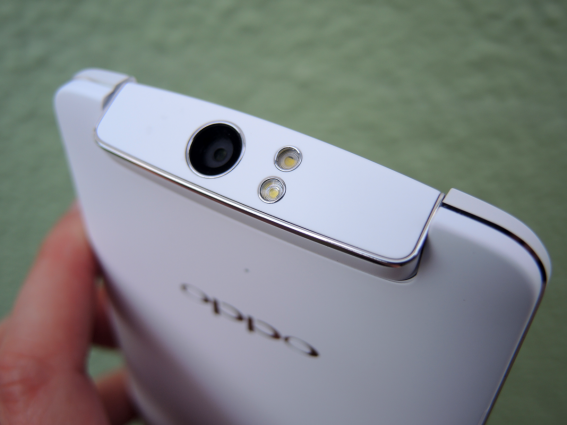
    From the patent, only about 25% to 35% of the top of the OPPO device can be bent and folded longitudinally. This means that this smartphone is somewhat similar to the OPPO N1 in which only a fraction of the camera can be folded such that a single camera can be used as both rear snapper and selfie shooter. The other patents from ZTE, Samsung, and Huawei appears to show 50% folding. Taking a close look at the patent document, the display lodges on top of a fixed chassis and some hinges connect the folding zone. this configuration means that the smartphone needs only a single camera module as it can be rotated at will to become either a selfie snapper or the main shooter of the smartphone.

    Like I said earlier, this is only a patent and there is no need to get our hopes high because this device may never see the light of day (many patented devices don't). As of now, other details of this smartphone are unknown.

    Related

    I'm a professional geologist and an enthusiastic writer who is interested in technology. I sleep and wake with my mobile phone, data connection on 24/7. My PC is never more than a metre from me.


    Source: OPPO Joins The Growing List of Potential "Foldable Smartphone Manufacturers"

    Wednesday, November 1, 2017

    HTC may reveal its China-bound stand-alone VR headset later this month

    Why it matters to you

    A possible launch during HTC's developer conference in Beijing could be a sign that its Daydream-based stand-alone VR headset will make a North American debut, too.

    HTC originally teased a stand-alone headset for virtual reality earlier this year during Google's developer conference. It will be based on Google's Daydream platform baked into Android, and Google's WorldSense technology that provides six degrees of freedom without the need for external sensors. HTC said it was also working directly with Qualcomm to produce a stand-alone VR headset for China without any ties to Google. Now we know more about the latter unit.

    Reports have surfaced that HTC will officially reveal its stand-alone VR headset for the Chinese market during its annual Vive Developer Conference in Beijing starting November 14, 2017. This model will be based on Qualcomm's VRDK developer kit packed with its Snapdragon 835 processor, and its inside-out positional tracking developed with Leap Motion for full-body movement in VR.

    In addition to the Snapdragon processor, Qualcomm's developer kit includes a single 2560 x 1440 AMOLED display, two built-in monochromatic global shutter cameras (1280 x 800) for motion tracking, two monochromatic VGA global shutter cameras for eye tracking, 4GB of system memory, and 64GB of storage. It also includes Wi-Fi and Bluetooth connectivity, and a Type-C port for charging the battery.

    According to Qualcomm, the inside-out motion tracking provides a better experience for mobile VR. While products like Samsung's Gear VR only track head movement (aka three degrees of freedom), it's new mobile VR platform also tracks your physical location in the real world (aka six degrees of freedom). And unlike the HTC Vive for PC, there are no external sensors tracking your movement, nor is there a physical tether to a PC. Even more, you don't need a smartphone.

    HTC's deal with Google to produce a Daydream-based stand-alone VR headset likely relies on the same developer kit, only Google has created its own method for tracking movement called WorldSense. Content will likely be distributed through Viveport and Google Play when the stand-alone unit arrives before the end of 2017. It also won't be sold in China, hence HTC's partnership with Qualcomm to produce a version specifically for that market.

    That said, the model shown during the conference on November 14 won't include Google's Android and Daydream platforms. But there's still a possibility that HTC will officially reveal its Daydream version in the United States at the same time. It may be marketed as Vive Eclipse or Vive Focus whereas the China-bound model may simply be coined as Vive M, or Vive Mobile.

    Virtual reality is about to become a bit more mainstream before the end of the year. As previously reported, both HTC and Lenovo are providing Daydream-based stand-alone models before December's end. Samsung is supposedly working on a stand-alone unit too while the Oculus Go headset is slated for early 2018. None of these units require a smartphone or external motion-tracking sensors.

    Meanwhile, VR headsets designed specifically for Windows 10 are making a splash. Five are now listed on Microsoft's online store selling for under $500, manufactured by Acer, Dell, HP, Lenovo, and Samsung. All support the new Windows Mixed Reality platform for virtual reality and augmented reality experiences and applications.

    Don't Miss

    Don't miss out: These six awesome laptop deals can save you up to $470

    Up Next

    Let's Enhance is a website that uses A.I. to add details to upscaled photos


    Source: HTC may reveal its China-bound stand-alone VR headset later this month

    Tuesday, October 31, 2017

    U.S. Investor Tries to Shake Up Sina, a Pillar of China’s Internet

    In turn, Aristeia, which manages $3 billion in investor money, has accused Sina of "failing to hold itself to the standards expected of U.S.-listed public company boards."

    Foreign investors seem less than worried about any lack of control or lapses in corporate governance if the market is any indication. Shares in those companies have been on a tear in markets around the world as Chinese consumers reliably use their smartphones to buy electronics, shop for groceries, make investments, play games and look for dates.

    With more than 700 million users, China is the world's largest single internet market. Weibo has 313 million monthly average users.

    Still, some investors are quietly complaining about corporate governance practices.

    Chinese companies that list shares in the United States are not necessarily subject to American rules. Most are incorporated in light regulatory jurisdictions like the Cayman Islands.

    As a result, Chinese companies often behave differently. While Sina holds a regular annual meeting, some of its peers do not, a standard for the United States. Baidu, the search engine giant, has not held an annual shareholder meeting since 2008. JD.com, the online retailer, has never held one.

    "Investors have been getting a bit fed up with companies like Baidu and JD.com not having general meetings," sa id Jamie Allen, the secretary general of the Asian Corporate Governance Association.

    A spokesman for JD.com said: "Investors appreciate our candor both on earnings calls and in engagement throughout the year. This issue has rarely, if ever, been raised to us." Baidu did not respond to requests for comment.

    Foreign investors also typically have fewer shareholder protections. To get around Chinese restrictions on outside investments in sensitive industries, many companies use a complicated legal structure, called a variable interest entity, or V.I.E. Under those arrangements, shareholders have rights to the profits of a company, but they do not control key assets — potentially leaving them exposed if the company runs into trouble or the Chinese government declares the structure illegal.

    Sina was a key player in the Chinese internet's emergence as a social and economic force. Its Weibo service, once derided by critics as a knockoff of Twitter, has grown in size and functionality to the point where it is now a must-read for many people.

    Even after the Chinese government curbed political or controversial discussion on Weibo, it remains a well-read resource. Weibo now has its own stock listing, while Sina owns a 46 percent stake. Sina's other operations include online news and entertainment.

    That separate listing helped set off the fight with Aristeia. Sina's shares have risen nearly 75 percent so far this year. But Weibo's performance has been better, with the stock more than doubling. Based on their stock market values, Weibo is now more than twice as valuable as Sina — a gap that Aristeia says points to lackluster management and poor corporate governance.

    Sina uses a V.I.E. structure. Only one of the five director seats is available each year. The chairman and chief executive, Charles Chao, has a permanent position; the other members serve four-year terms.

    Aristeia is pushing for representation on the board so that directors will consider measures that would result in more money for shareholders. The se include a sale or merger of Sina or Weibo or a buyback of shares by management.

    Sina says that any deal proposed by Aristeia would not clear because of China's complicated telecom and media rules. Alibaba, the Chinese e-commerce giant, also owns a stake in Weibo, further complicating its options, Sina said.

    "The time, resources and capital invested to pursue a transaction with a high likelihood of failure, rather than accretive and value creating opportunities, is not in the best interests of Sina shareholders," Sina said in a statement.

    Some outsiders disagree. "I think Sina has built in Weibo a very valuable asset that is not being reflected in its share price," said Randy Gelber, a managing director at UBS, the Swiss bank.

    "It would seem like there should be some common ground from both sides on how to realize that value," he said.

    Two proxy advisers — Glass Lewis & Company and International Shareholder Services — have given some weight to Aristeia's arguments. Glass Lewis recommended that Sina expand its board to allow Aristeia's nominees, and I.S.S. recommended that Sina shareholders support one of the two nominees.

    "An examination of the arguments reveals compelling reasons for shareholders to seek change at the company," I.S.S. said.

    The fight is being watched closely at a time when American activists are bringing their bare-knuckled approach to Asia. Daniel S. Loeb, one of the most vocal activists, scored a victory in a campaign for change at the Japanese conglomerate that owns the 7-Eleven convenience store chain last year. In South Korea, the activist Paul Singer and his hedge fund firm, Elliott Management, picked fights with Samsung Electronics and the Bank of East Asia in Hong Kong.

    It is also unfolding as the Chinese government looks to take a more active role in how its corporate giants are managed.

    Even if Aristeia emerges victorious, the real test could be whether its candidates will be able to push for change internally.

    "The question is whether that board member would be able to do anything other than jump up and down at meetings," said Paul Gillis, a professor at Peking University's Guanghua School of Management.

    Continue reading the main story
    Source: U.S. Investor Tries to Shake Up Sina, a Pillar of China's Internet

    Monday, October 30, 2017

    Lite-On Tech looks to ship smartphone 3D sensing CCMs in 2Q18

    Lite-On Tech looks to ship smartphone 3D sensing CCMs in 2Q18

    Siu Han, Taipei; Adam Hwang, DIGITIMES [Tuesday 31 October 2017]

    Lite-On Technology expects to ship smartphone-use 3D sensing CCMs to China-based vendors in second-quarter 2018 at the earliest. In the wake of Apple's adoption of facial recognition-enabled 3D sensing cameras for iPhone X, Android smartphone vendors, especially China-based ones, also plan to adopt the feature for flagship models to be launched over the next six months, according to Lite-On Technology CEO Warren Chen.

    However, these smartphone vendors will initially adopt 3D sensing CCMs for flagship models only, and for other high-end and mid-range models in 2019, he said.

    Structured light and time of flight (ToF) are two mainstream 3D image sensing technologies. Structured light, as used in iPhone X, is capable of accurate 3D sensing at short distance, while ToF, with ranging based on computing the time for reflection of light, features sensing of long-distance images and is suitable for use in smart home and IoT (Internet of Things) devices. Lite-On applies both technologies to 3D sensing CCMs, Chen noted. Structured light may have larger long-term growth potential but is more expensive, Chen added.

    Lite-On has used infrared LED sensor devices in ToF-based 3D sensing CCMs and has begun small-volume shipments of such CCMs to smart wearable device vendors, Asia-based VR (virtual reality) device vendors and US-based MR (mixed reality) device vendors. ToF-based 3D sensing CCMs are suitable for surveillance systems due to its low-light imaging capability.

    Lite-On has been a main supplier of power supplies used in smart speakers for US-based vendors. As smart speakers have become a main growth driver of demand for AI (artificial intelligence) home-use devices and may be upgraded by being equipped with 3D sensors for ranging and safety control in 2018, Lite-On may supply 3D sensing CCMs for smart speaker vendors.


    Source: Lite-On Tech looks to ship smartphone 3D sensing CCMs in 2Q18

    Sunday, October 29, 2017

    Gionee F6L Appears with 18:9 Display & Budget-Friendly Specs on TENAA

    Almost all the major smartphone manufacturing companies and even lesser known ones have released full screen design smartphones. In the previous month, Gionee had unveiled the Gionee M7 phone with FullView display. A new Gionee phone labelled as Gionee F6L with full screen design has been approved by Chinese certification site TENAA. The TENAA listing has only revealed its specifications, but its images are still under the wraps. It appears that the TENAA listing for Gionee F6L will be updated with its images later on.

    The TENAA listing of Gionee F6L has revealed that it will be coming with a 5.7-inch IPS screen that will be supporting an HD+ resolution of 1440 x 720 pixels. This indicates that the handset will feature an elongated 18:9 display. The device measures 153.8 x 72.6 x 7.8mm and its weight is 141 grams.

    Gionee M7

    Read More: Gionee Launches The Steel 2 Plus As The M7 Power in Thailand

    It is driven by a 1.4 GHz processor. Speculations have it that it may be featuring a Snapdragon 430/435 chipset. It will be coming in RAM choices like 3 GB and 4 GB. It has an internal storage of 32 GB and is expected to feature a microSD card slot. It features a 2,970mAh battery.

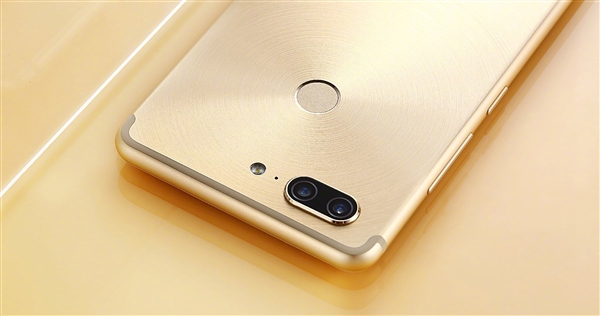
    For photography, Gionee has included a dual camera setup featuring a 13-megapixel sensor and a 2-megapixel sensor on the back panel of F6L phone. The frontside of the phone is equipped with an 8-megapixel camera. It will arrive preinstalled with Android 7.1.1 Nougat and is likely to come loaded with Gionee's Amigo OS proprietary skin.

    The specifications of the Gionee F6L suggests that it will be a budget phone. It will be available in color options like blue, gold and black.

    The Gionee F205 is a yet to be unveiled budget phone from the Chinese manufacturer. Its specs are even lower than the F6L. The company is also rumored to be working on Gionee S11s that has recently appeared on TENAA and the Gionee S11 that has been spotted on GFXBench in the previous month. It appears that these phones may get unleashed before the end of 2017.

    (source)


    Source: Gionee F6L Appears with 18:9 Display & Budget-Friendly Specs on TENAA