Friday, June 2, 2017

Nubia has a new flagship smartphone with 8GB RAM and Quick Charge 4+ support

There are a couple of new flagship smartphones running on Snapdragon 835 processor these days. This includes the Sony Xperia XZ Premium, Xiaomi Mi 6, HTC U11 and the Galaxy S8 for the US market. If you're looking for that extra edge, ZTE's sub-brand Nubia has a new flagship smartphone that stands out as an interesting alternative.

Meet the Nubia Z17. It's the first Snapdragon 835 powered device to come with 8GB of RAM and it's also the first to incorporate Qualcomm's latest QuickCharge 4+.

The Nubia Z17 features a 5.5″ Full HD display and it runs on Qualcomm's top of the line Snapdragon 835 processor mated to 8GB of RAM and has 128GB of UFS 2.1 storage. This is the second smartphone to feature 8GB of RAM after the ZenFone AR.

For imaging, the Z17 features a dual-camera system with a 23MP + 12MP combo that has a 1.4 micron pixel size and f/1.8 aperture. It boasts a 0.03-second ultra-fast focusing speed and comes with a hybrid 2X zoom feature.

The body of the Z17 is said to be 98% metal and it's also listed as the first outdoor waterproof Nubia phone but there's no mention of its IP rating. The device also comes with a machine learning feature that will optimise the device according to your usage for a better experience.

Keeping the device powered is a 3,200mAh battery which is rated to last up to 2.4 days with its NeoPower 3.0 power saving system. It comes with a NeoCharge Quick Charging feature which can do 50% charge in 20 minutes. This charging technology is based on Quick Charge 4+.

According to Qualcomm, the latest Quick Charge 4+ offers the same benefits as Quick Charge 4 and it comes with better thermal management, faster charging and better safety features. It comes with Dual Charge, that comes with a second power management IC which helps to lower thermal dissipation while reducing charge times. In summary, a Quick Charge 4+ compatible device can offer up to 15% faster charging or 30% better efficiency compared to Quick Charge 4. Quick Charge 4 promises 50% charge in just 15 minutes for a device with a 2,750mAh battery.

In China, the Nubia Z17 with 8GB RAM and 128GB storage is going for 3,999CNY which is about RM2,512. It will be available in 5 colours – Aurora Blue, Black Gold, Obsidian Black, Solar Gold and Flame Red.

[ SOURCE 2 ]

Related


Source: Nubia has a new flagship smartphone with 8GB RAM and Quick Charge 4+ support

Thursday, June 1, 2017

Face-off: which smartphone takes the best photos - Samsung Galaxy S8+ or Huawei P10 Plus? Our photo editor’s verdict

Samsung officially released its new Galaxy S8 phones in Hong Kong in May and reviewers have been smitten not only by its super slick design but impressive processing power. Both the S8 and S8+ also boast top-end camera specs, a slight upgrade from those of the S7 series.

But how does the S8+ stack up against the Huawei P10 Plus when it comes to smartphone photography? We crowned the P10, its smaller (and cheaper) sister, the best camera phone in a comparison with two other top-of-the range models, the LG G6 and Sony Xperia XZs, in April.

Which smartphone takes the best photos – the LG G6, Huawei P10 or Sony Xperia XZs? Our photo editor's verdict

Once again, we have asked South China Morning Post photo editor for Culture and Lifestyle Antony Dickson to test out the rear cameras on the two handsets. For testing, we used loan units provided by the brands; Dickson shot in auto mode with resolution set to the highest in broad daylight, as well as in low light conditions with no flash. Here are his observations and verdict.

Samsung Galaxy S8 full review: at HK$5,698 it's pricey but there's a lot to like, from its feel to its look to its processing power

Daylight images:

In general, the Huawei tended to capture slightly more information, or have a greater dynamic range, producing a slightly more gentle graduation from the highlights to the shadows - meaning more details in the darker parts of the images as well as well as the lighter parts - than the Samsung. But there is more to good image quality than a simple histogram.

For instance, take a look at the images below of seafood taken from above.

The Huawei camera tended to have smoother range of images, but the Samsung perhaps provided more overall attractive image. In this case the colour balance and saturation of the Samsung was nicer.

Another example is the polystyrene boxes (below) that are bright and shimmering, with nice shadow detail, in the S8+, which was how my eyes saw it.

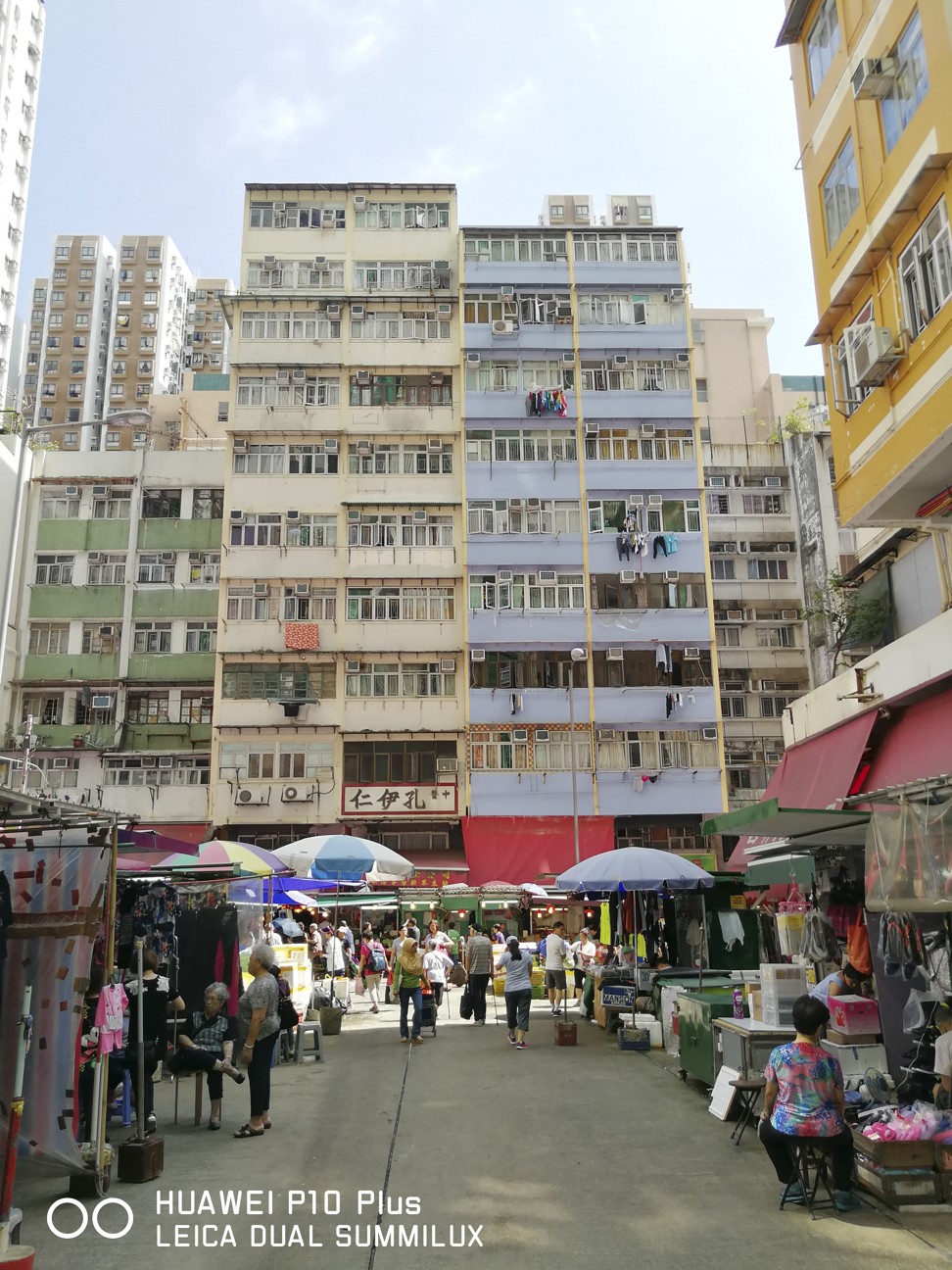
Again, these images of the vertical building are slightly darker and, therefore, more saturated when shot with the Samsung Galaxy S8+ than with the Huawei P10 Plus.

Sharpness wise, both cameras are very good, with nice sharpness in the corners, even though the images, according to the data, were shot at a wide open aperture, which is where lenses generally perform the worst, with a low ISO (Huawei 125 vs Samsung 50) and a fast shutter speed (1/900 vs 1/1200) to stop hand/camera shake.

The last outdoor test was to shoot in perhaps the most challenging conditions for a camera/lens, shooting subjects backlit.

Funnily enough this is where the Samsung shone through. The Samsung's image were crisper, an accurate colour balance, and strangely showed very little pixilation, i.e. a less grainy in the shadows, and nice smooth exposure and image quality.

The Huawei, on the other hand, was a touch green, the image's pixels starting to break up at higher magnification. Again, though, the P10 Plus did capture more details in the highlights and shadows, but I would say the Samsung shot looks a lot better.

Low light images:

These images were shot in an indoor gym, with all but one fluorescent light turned off.

The Huawei shot was taken at ISO 3200, speed 1/17s, aperture f1.8, with file size 6MB. The pixels retain good structure, more like a traditional grain, contrasty and sharp. Colour balance is good, with a slightly warm tone, and a nice gradation from highlights to shadows, albeit slightly more contrasty.

Exposure, if anything, is a sliver under, i.e. a touch dark. Moody but an accurate feel of the dark corner we took the image in.

The Samsung shot was taken at ISO 1000, speed 1/10, aperture f1.7, with file size 4.2MB. The pixels at 300 per cent do become more blurry and texturised than the Huawei.

Colour balance is a touch green, the image is less contrasty and a little flatter, as can be seen in the histogram, which captures a little less of the shadow detail, and in the highlights. It seems the Samsung has made a more neutral image, less contrasty, bringing the subject's exposure into a narrower dynamic range (i.e. less shadow and less highlights information).

Verdict:

The Huawei P10 Plus performs better in low light. Even though it was shot using an ISO substantially higher than the Samsung Galaxy S8+ (3200 vs 1000), the grain structure of its low light image is better at higher magnification; the dynamic range makes the image a little more moody, with shadows and highlights well represented and captures the actual lighting well, and the colour balance was pretty spot-on.

The Huawei may be a little sharper due to the faster shutter speed of 1/17 versus Samsung's 1/10, and also due to the sharper pixels from the sensor and the more contrasty image.

It's a very close call. If you like taking images of ping pong players in dim lighting, then go with the Huawei P10+. But if I had to make a choice between the two phones, I would choose the Samsung. The daylight images have good colour balance, nice exposure, correct saturation and nice pop straight out of the phone. Just what I would want from a phone camera, good-quality and simple.


Source: Face-off: which smartphone takes the best photos - Samsung Galaxy S8+ or Huawei P10 Plus? Our photo editor's verdict

Wednesday, May 31, 2017

Apple Dominates China’s Premium Smartphone Market

A Look at Apple's iPhone and Rising Market Cap PART 5 OF 13

By Adam Rogers  | Jun 1, 2017 12:58 am EDT Over 80% share in China's premium smartphone segment

Counterpoint Technology Market Research stated that the Chinese smartphone market in 1Q17 rose 4% YoY (year-over-year), driven by low-end phones priced between $100–$400. Domestic manufacturers such as Oppo, Vivo, Huawei, and Xiaomi dominate the overall smartphone market in China.

Apple (AAPL), however, dominates sales for smartphones priced over $600 (or 4,000 yuan). Counterpoint's Neil Shaw stated, "Apple's share of this super-premium segment remains at 80%, with five out of the top ten model SKUs belonging to Apple. The 4000 [yuan] and above segment mostly peaks during the Apple iPhone launch quarter and shrinks for the rest of the year."

Apple Dominates China's Premium Smartphone Market

Apple accounts for 10.7% of overall market in China

According to Counterpoint Technology Market Research, competition from domestic players led to a fall in Apple's smartphone market share in China from 12.5% in 1Q16 to 10.7% in 1Q17. Domestic giants account for over 50% of the market in China, but their combined total operating profits comprise less than 5% of global operating profits.

While Oppo, Vivo, and Huawei accounted for 1.3%, 1.5%, and 1.6% of global operating profits, respectively, Xiaomi and ZTE are still reporting operating losses. Although Chinese companies in the smartphone space have focused on lower costs to drive their revenues, Apple has focused primarily on the premium segment, which represents the majority of the profits.


Source: Apple Dominates China's Premium Smartphone Market

Tuesday, May 30, 2017

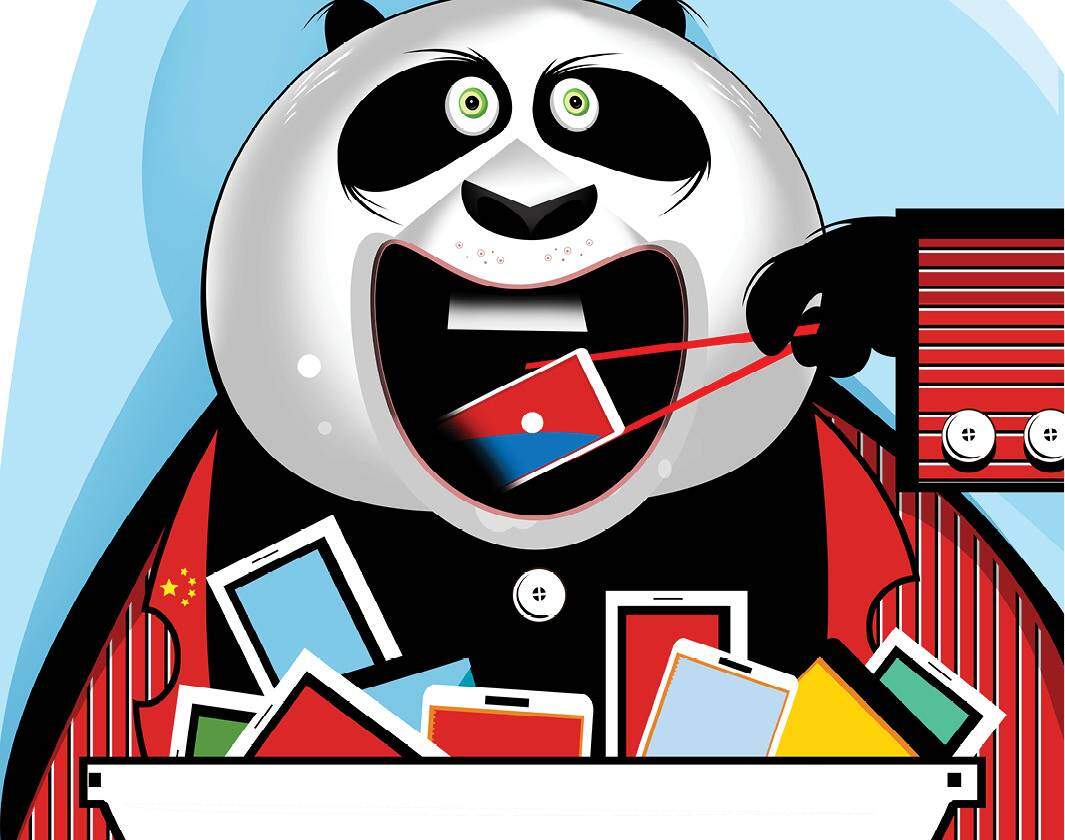
Indian chop-suey: How Desi smartphones lost out to China

Indian chop-suey: How Desi smartphones lost out to China It's perhaps the most unscientific way of determining a shift in phone fortunes. But after over a decade of hearing this happen, I believe I've found the first sign of coming mobile dominance (or decline): the ringtones you hear on public transport, the first class compartments of Mumbai locals, for instance. Long before data confirmed the ebb in its fortunes, Micromax's distinct sitar soaked caller tune was ceding ground to the ebullient chiming of a tune Xiaomi simply calls Mi. Just as Nokia's ringtone gave way to Samsung over half a decade ago, and Samsung shifted to accommodate Micromax over the last couple of years.

It's no secret that Chinese smartphone handset makers, as a collective grouping, have a domin ant share of the Indian market — the Korean Samsung still maintains its lead. According to an IDC report, the Chinese vendors have grown by a staggering 142.6% which translates into a 51.4% share of smartphone shipments in India. The share of homegrown vendors has fallen to 13.5% in the first quarter of 2017 from 40.5% in Q1 2016. News reports quoting CyberMedia Research believe the dominance could extend in the quarter through June

It seems like only yesterday that Micromax topped the leaderboard after years of snapping at the heels of Samsung — it was actually in 2014-2015 — before settling down as a strong No 2. Intex frequently made it to the Top 5. So, what happened?

After making history, the Indian brands didn't learn from it

The decline brings with it a heady whiff of déjà vu. Indian smartphone makers fell to ruses from the same playbook they'd used to dislodge the likes of BlackBerry and Nokia; brands that were big, complacent and unable to see the future or react in time. In Nokia's case it was dual-SIM phones. With BlackBerry, it was smartphones. With the Indian players, it was their relatively sluggish adoption of 4G. An industry insider who wishes to remain anonymous says, "The single biggest shift last year was Reliance Jio. The market moved faster than anticipated. Some players read the market wrong and their folio was overwhelmingly skewed towards 3G." As a result, Indian brands went quiet, realising it was pointless spending to promote a feature set that was lacking. A void that the Chinese manufacturers were only too happy to fill.

Indian phone makers exhibited 'unenlightened selfie interest': ignoring the sheer power that staking a claim to the 'selfie', conferred on a brand. India currently leads the world in selfie-related deaths, if some media reports are to be believed. Even disregarding that dire statistic, the rise of Instagram, Snapchat and burgeoning popularity of apps like musical.ly, shows a heavy skew towards the use of front-facing cameras. It was ripe for the taking, but the people doing the taking were the Chinese brands. As Gionee, Vivo and Oppo (the last two are owned by the same firm, BBK, which also counts OnePlus as a wholly owned subsidiary) squabbled for the mantle of selfie expert, the Indian brands were entirely out of the frame.

The Indian brands were out of touch with how much the customer was willing to pay

These brands began as traders and price warriors. And while that mindset helped them get this far, it's been hobbling their growth ever since, believe the experts. Their initial offer was often a spec sheet similar to a leading brand but priced below the `10,000 mark. What the Chinese brands did was explode the `10,000 plus market, allowing them the leeway to go in for a more premium feature set. As marketing consultant Jagdeep Kapoor of Samsika puts it, "The Indian players should have made their brand count instead of making it discount! The Chinese moved up the ladder from product to brand as the Indians moved down from brand to commodity. They didn't realise the smartphone is something consumers don't just use, but show off."

They lost track of who and what consumers found cool

Over the last few years, the Chinese smartphone makers have commandeered every Indian celebrity that matters. Deepika Padukone is endorsing Oppo, Ranveer Singh is peddling Vivo, Alia Bhatt and Virat Kohli are mouthpieces for Gionee and even the Big B has been harnessed to flog OnePlus.

But perhaps the biggest coup was by Vivo, joined at the hip to India's most viewed sporting league. Says Vivek Zhang, CMO, Vivo, "Our association with IPL starting 2016 proved to be a major milestone." Encouraged, Vivo has tied up with the Pro Kabbadi league for five years. Says Zhang, "Going forward, we are focusing significantly on our strategic associations across genres to reach our customer base."

Cont rast that to Micromax which, pursuing global ambitions, went in for Hugh Jackman, a star that the hinterlands didn't recognise or care much about. And then last year, it did an ad in English with a starcast whiter than a Ku Klux Klan rally. And yet another with a 'desier than thou' vibe starring comedian Kapil Sharma ranting against English. It left consumers confused about who or what the brand really stood for. Intex relied on the dubious star appeal of Farhan Akhtar and bet big on the Gujarat Lions who finished second last in the IPL. Celebrities of course can't rescue a brand, but if the communication strategy involves a billboard and TV blitzkrieg, it helps having the most popular faces on your side.

The desi brands squandered their opportunity to lead

All the experts conclude Indian brands could have used the time they'd pulled ahead a lot better. Says Nilesh Gupta, managing partner, Vijay Sales, a Mumbai-based durables retail chain, "Had they setup R&a mp;D and manufacturing, the game would have been different. If your source starts to sell directly, they will outsmart you." Xiaomi succeeded, relying on an online first model and extraordinary levels of brand loyalty — fans promoting phones and other products to friends, colleagues and fellow netizens, according to Manu Jain, MD for Xiaomi India. If Indian brands were thinking on these lines, there's precious little to show for it.

Next is What?

The old Samsung tagline is probably giving CMOs at the desi phone brands sleepless nights. As the industry insider puts it, "A good analogy is a lion charging a herd of buffalos. Your strategy individually is to be only faster than the slowest buffalo. For each player, there are other more vulnerable brands you can steal share from." He recommends not taking the Chinese head on but finding a space or a price range where a brand can be a Top 3 player. The other choice is to hold out until the Chinese blitzkrieg subsides . Market sources claim the cost of acquisition is up from `500 to close to `7,000 or `8,000. Maybe if one or more of these do a LeEco and spend themselves out of the market, they'll leave behind a more level playing field.

In a previous interview Keshav Bansal, director, Intex was optimistic that a return was imminent: "It's 100% possible for Indians to come back. Our trump cards are credibility, trust and knowledge of local market." The last, perhaps most difficult option, is to fight these brands by finding the next big opportunity in the mobile space. Something that these players will hopefully be too big or complacent to acknowledge. And then to do unto them, what they did unto the Indian handset makers.


Source: Indian chop-suey: How Desi smartphones lost out to China

Monday, May 29, 2017

AirAsia Launches Smartphone App to Help Thais Learn Chinese

AirAsia has launched a smartphone app created by BBDO Bangkok and app developer 1Moby that helps people in Thailand learn Chinese characters. Called 'Unlock Han Zi' the app was created in light of the fact that AirAsia has the most direct routes from Thailand to China.

The hope is that by helping customers learn Chinese, they can more easily connect with Chinese people and their culture.

That's easier said than done. For anyone who has ever tried to learn Chinese from scratch the sheer number of characters one is required to memorize can be daunting.

In an effort to make it easier, the 'Unlock Han Zi' app utilizes the smartphone unlock routine to practice writing the characters. Considering that the average person unlocks their phone 110 times a day this is a great way to help them learn while doing so.

Check it out:

The concept is similar to an app released last year by Samsung that encouraged children to use Arabic more often by requiring them to write out the characters to unlock their phones.

What do you think?

comments


Source: AirAsia Launches Smartphone App to Help Thais Learn Chinese

Sunday, May 28, 2017

In China, Umbrellas and Basketballs Join the Sharing Economy

"But there's no question that it's a bubble," he added. "It may have roots in something valuable, but can you really share everything?"

Chinese entrepreneurs like Xu Min think that, quite possibly, you can. In March, the 30-year-old serial entrepreneur from Jiaxing, a town in the eastern Chinese province of Zhejiang, came up with the idea of a basketball-sharing service after he heard some friends complain about the inconvenience of carrying a ball around.

Just four days later, Mr. Xu set up Zhulegeqiu, which in Chinese is a pun that roughly means "Rent a Ball." It lets users rent basketballs from custom-designed automated lockers at basketball courts around the country. To rent a ball, users scan a code on the locker with their smartphone camera, unlocking a compartment holding a basketball.

Zhulegeqiu charges users about one r enminbi, or about 15 cents, per hour for rental. A deposit of about $10 is required unless the user has a high rating on Sesame Credit, the social credit scoring system developed by China's Ant Financial, an affiliate of e-commerce giant Alibaba Group.

"In the long run, it may be more cost-effective to buy rather than rent a ball," Mr. Xu said. "But we think Chinese users are willing to pay a little more for convenience."

Earlier this month, Zhulegeqiu received around $1.4 million in venture investment from Modern Capital, a Shanghai-based venture capital firm.

Behind China's sharing boom is a surplus of money and — some critics say — a shortage of good ideas. Venture capital firms in China invested $31 billion in 2016, up nearly one-fifth from the previous year, according to a recent KPMG report. Much of that has gone to sharing companies, as some big-money winners and a thriving start-up scene draw investors from home and abroad.

"We're seeing a lot of money bouncing around," said Zhou Wei, chief executive of XNode, a start-up accelerator and co-working space in Shanghai, "and foolish investments being made."

Photo A woman placing an order on a touch screen at a pick-up station of the car-hailing app Didi in Shanghai. The Chinese government projects the sharing economy will account for 10 percent of the country's economic output by 2020. Credit Imaginechina/Associated Press

In its latest iteration, the sharing economy in China has evolved into something like an internet-enabled rental business. Unlike Airbnb and Uber, which provide a platform that connects users to existing resources, the latest sharing companies in China own the product and rent it out to users.

That is not to say sharing in China is necessarily a bad idea. Didi Chuxing, the ride-sharing company that bought Uber out of China, is a private company and does not disclose its financial results, but its valuation is rising as investors pour in. China also has conditions ripe for sharing, including a huge population, dense cities and a sizable group of people who cannot afford to buy.

"In China, average incomes are still very low and the market in many ways is still very price-conscious," said Mark Natkin, managing director of the technology research firm Marbridge Consulting. "So if the technology is there to support it and there's a viable business model, there are all sorts of sharing economy or pseudo-sharing economy businesses that can potentially do very well."

China's cutting-edge, smartphone-based mobile payment systems also make sharing a snap. Run by Chinese internet giants like Tencent Holdings and an affiliate of Alibaba Group, the payment systems integrate seamlessly with a user's bank account and allow even tiny transactions with simple taps and camera snaps.

The Chinese government sees promise in sharing. It estimates sharing last year accounted for $500 billion in transactions, and projected it would account for 10 percent of China's economic output by 2020.

All that drives ideas that may seem puzzling to others — including Shen Weiwei's umbrella-sharing business.

Mr. Shen, an entrepreneur, acknowledges that it may be difficult for his start-up, a shared umbrella service called Molisan, to turn a profit. Molisan, which means "Magic Umbrella," will reap only small profit margins charging one renminbi (15 cents) to rent an umbrella for 12 hours from one of Molisan's custom-designed kiosks, and customers could end up stealing them.

But Mr. Shen said he was confident that others would see the public and environmental benefits of having an umbrella-sharing service. So far, Molisan has already reached agreements with both the Guangzhou and Fuzhou city subway companies to place kiosks there. The goal, he said, is to have an umbrella kiosk within a 100-meter range at all times.

"Everyone at home has a lot of umbrellas, but we never have them when we really need them," said Mr. Shen. "If we are successful, then users will no longer have to buy umbrellas."

Some companies, like the Shanghai-based Duola, which connects concrete mixers, mixer drivers and construction sites, are more niche and have analogues with similar rental businesses elsewhere. Others have a broader user base. In recent months, top venture investors have been setting their sights on the portable phone-charging business, with plans to put portable-battery kiosks in malls and elsewhere. In the past two months alone, China's top three portable battery-sharing companies — Laidian, Xiaodian, and Jiedian — raised more than $127 million in financing, according to itjuzi.com, a website that tracks investment in Chinese technology companies.

Many remain skeptical. "Sharing basketballs, sharing umbrellas — these are all bad ideas," said Allen Zhu, Shanghai-based managing director at GSR Ventures, which was an early investor in Didi Chuxing, the popular bike-sharing company Ofo and Xiaodian. "They're both very tied to a particular location, which makes it difficult for the company to expand."

Entrepreneurs like Mr. Xu, of Zhulegeqiu, disagree, though they acknowledge challenges.

For one, the company does not appear to have found a sustainable way to recover stolen balls. During initial testing, Mr. Xu said, one competitor stole a basketball to analyze it more closely. Zhulegeqiu had the thief's contact information and recove red it through an old-fashioned strategy: incessant telephone calls.

"We thought about putting GPS trackers on the balls," said Xu Jie, chief executive of Modern Capital, the venture capital firm backing Zhulegeqiu, and no relation to its founder. "But we did the math and we discovered that hiring a few people to physically track them down was cheaper."

Continue reading the main story
Source: In China, Umbrellas and Basketballs Join the Sharing Economy

Saturday, May 27, 2017

Apple Inc. (AAPL) Stock Can’t Rely on Any Real Help From China

Popular Posts: Recent Posts:

After years of only achieving minimal traction in the country, Apple Inc. (NASDAQ:AAPL) finally appears to be making headway in India … a market that sports 1.3 billion consumers who collectively spend $13.9 billion on smartphones, most of which aren't (yet) iPhones. Better still for owners of AAPL stock, India is in the midst of entering its next era of consumerism, with GDP growth rates persistently around 7%. Spending power is on the rise for a wide swath of its population, two-thirds of which are under the age of 35. That's Apple's prime demographic.

It couldn't be happening at a more fortuitous time either. See, while Apple is doing well enough in North America and Europe, it continues to slip in China … a market once hailed as the company's panacea. Though some onlookers are confident the company can turn things around there too, few can afford to be too hopeful.

Function Over Label at Apple

While Apple's fiscal second quarter (calendar Q1) report divulged some key details about how the company was faring in China, and elsewhere, it wasn't a complete look at the situation. Namely, the company's quarterly filings don't compare it to other smartphone makers.

IDC has crunched the numbers, however, and they're not great.

Technology market research outfit IDC estimates that Apple's market share slumped from 11% in the fourth quarter of 2016 to only 9.2% in the first quarter of this year. That makes it the country's fourth-biggest player for the all-important smartphone market.

Apple's loss was Huawei's gain. Ditto for Samsung Electronics (OTCMKTS:SSNLF), in China and everywhere else too. After an embarrassing string of exploding Galaxy Note 7's forced the company to recall all of them last year — taking a huge toll on its results and market share — it reclaimed its market share lead during the first quarter of 2017.

Sales in China are a key part of that recovery. Huawei gained global market share in Q1 as well.

The shifting market share has, or at least should have, AAPL stock holders asking questions, not the least of which is what these other manufacturers are doing that's so compelling.

Oppenheimer analyst Andrew Uerkwitz believes he has his finger on the pulse of this shift, explaining after talking with smartphone makers in China and Taiwan:

"There was general consensus among our conversations that confirms our thesis that Apple's dwindling market share in Greater China is due to the lack of compelling differentiation among hardware and software. The mobile user experience in China is heavily dictated by Tencent (OTCMKTS:TCEHY) and other local internet companies, making Apple's software and services ineffective as key differentiators."

Next Page


Source: Apple Inc. (AAPL) Stock Can't Rely on Any Real Help From China